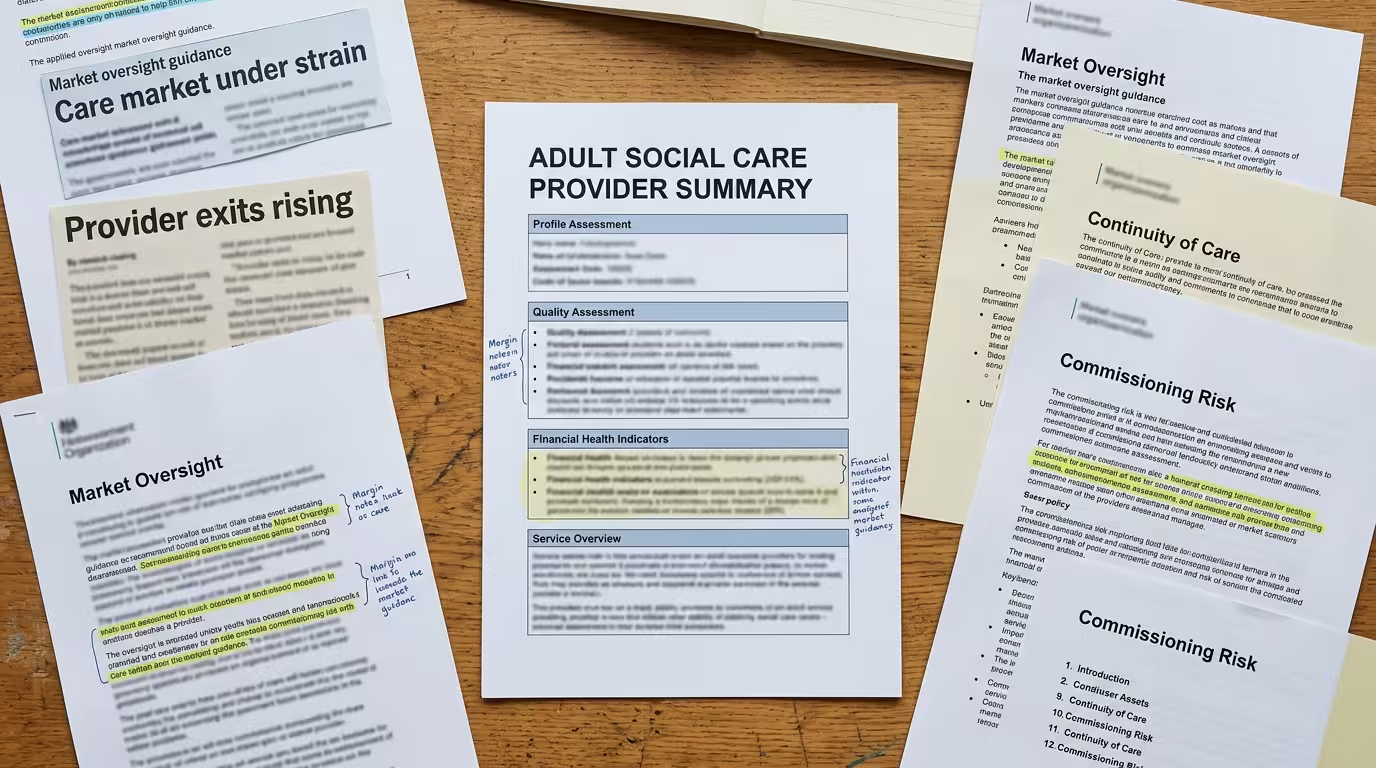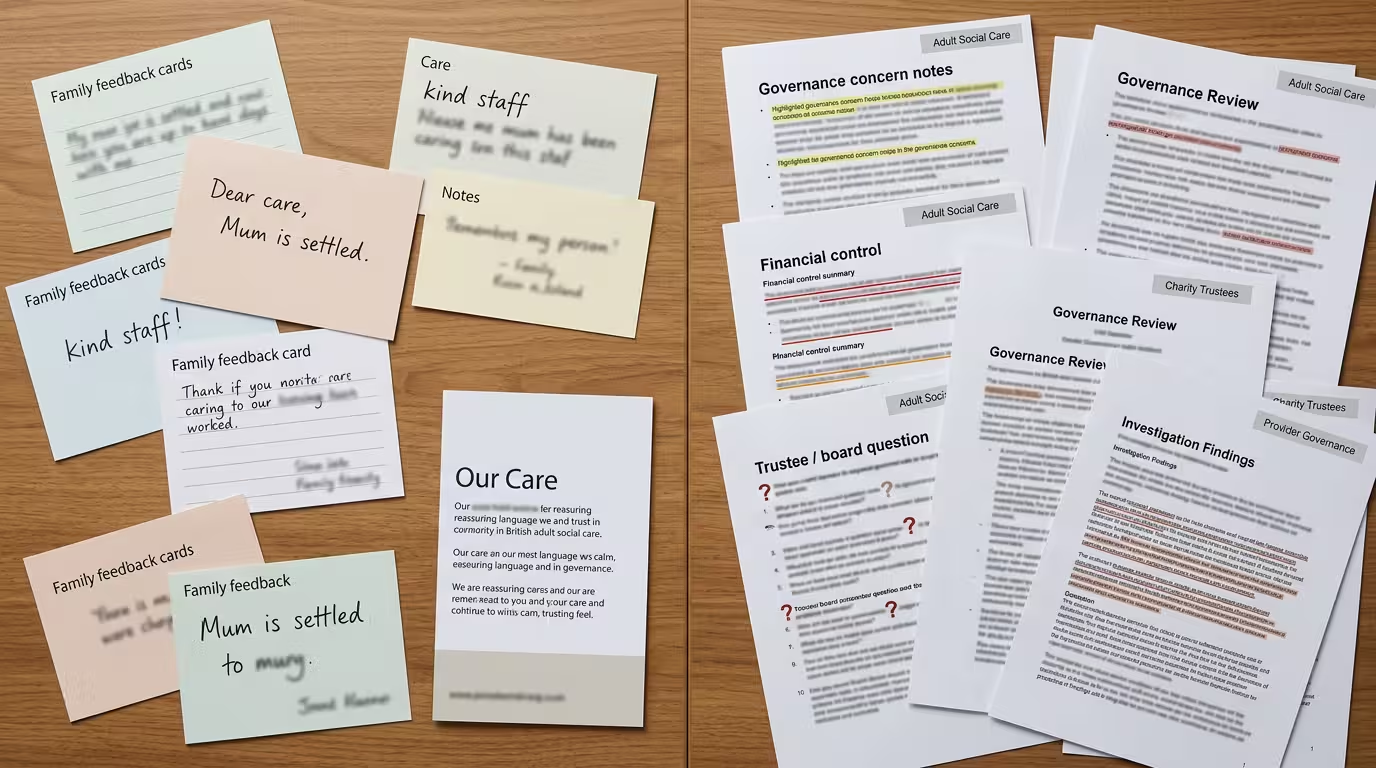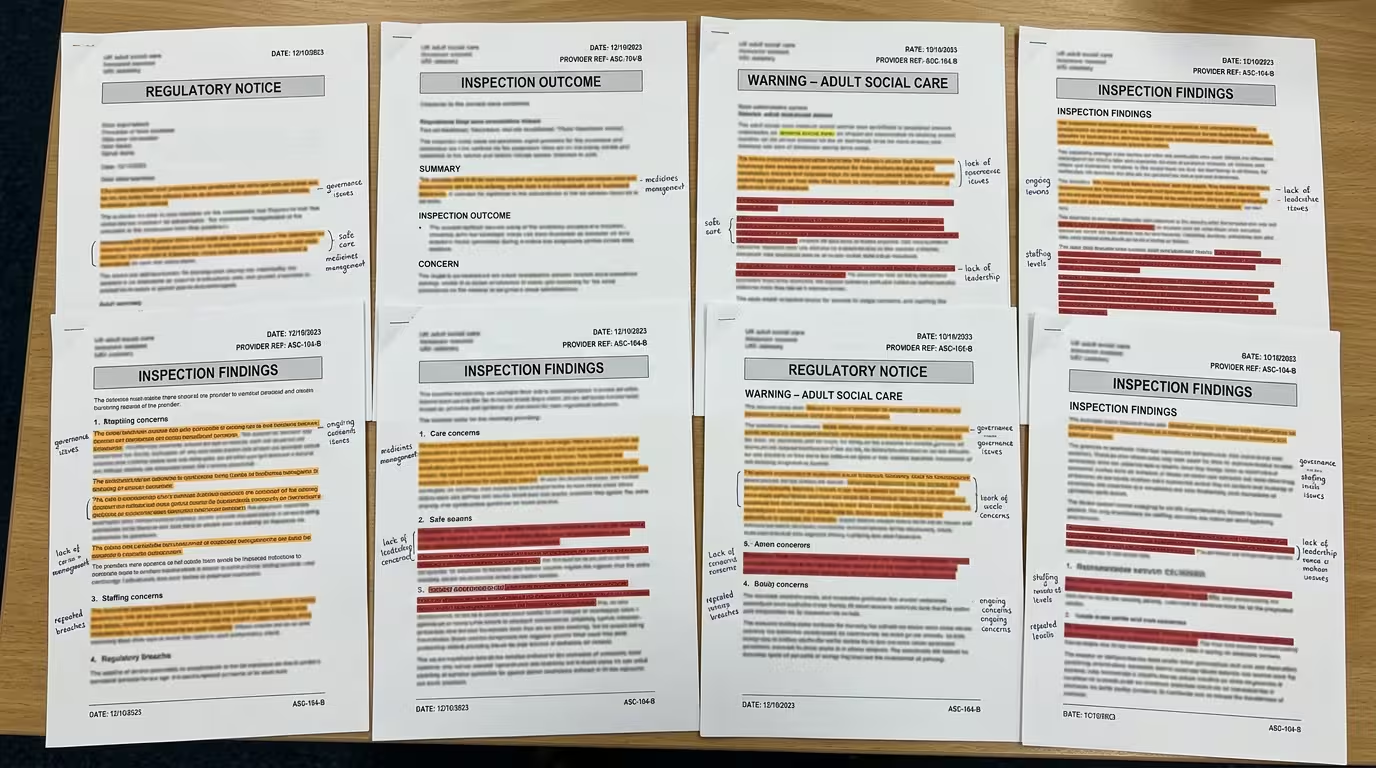
A warning notice can look smaller than it really is. On the page, it may appear administrative, technical, or provider-specific. It belongs to a formal regulatory process, carries specific legal meaning, and may be easy for outside readers to file under compliance rather than pattern. That is one reason warning notices are often under-read.
But warning notices are not just procedural noise. They sit at the point where visible concern has become serious enough for a regulator to require improvement within a defined timeframe. That matters on its own. It matters even more when similar notices and follow-on concerns begin appearing across more than one adult social care service in a short period. At that point, the reading problem changes. The question is no longer only what one provider got wrong. It becomes whether visible governance and safety strain are starting to look less isolated than they first seemed.
Why warning notices are often under-read
There are two common mistakes. The first is to read a warning notice too narrowly, as if it were nothing more than a technical enforcement step with little wider significance. The second is to overreact and treat every warning notice as proof of deep institutional collapse. Neither reading is especially useful.
A warning notice matters because it is a visible threshold event. It shows that concern has moved beyond background unease and into formal regulatory action. But it does not explain itself fully. It does not automatically settle the scale of the internal problem, how recent it is, whether it is improving, or whether the visible issue sits within a broader structural pattern.
That is why warning notices need reading rather than reflex. They are significant, but they are also context-dependent.
What recent notices and follow-on concerns show
Over the last two months, several adult social care services have shown exactly this kind of visible regulatory pressure.
At Amara Care Limited, the CQC publicly stated that it issued a warning notice on 8 January 2026 for failing to meet regulations related to safe care and treatment and good governance in supported living services. At Withins (Breightmet) Limited, the regulator served a warning notice on 11 February 2026 for failing to meet the regulations related to medicines optimisation. At Norwood House, a warning notice was served on 16 February 2026 for failing to meet the regulations related to good governance.
Then there is the more complicated case. At Lifeways Community Care (New Barnet), the CQC published an assessment on 9 March 2026 stating that the warning notice requirements had been met, but that ongoing concerns remained in relation to safe care and treatment and governance. That is especially important because it shows that the public reading does not always end when the notice is technically complied with. The visible issue can persist in a more layered way.
Why the pattern matters more than any single case
One warning notice may still be read as local and contained. Several warning notices and continuing concerns across different providers in a short period create a different interpretive problem. They begin to show that certain types of weakness are not appearing only once, and not always in exactly the same form.
That does not mean all these providers are the same. They are not. It does not mean one pattern explains every service. It does not. But it does mean the public footprint is starting to show a repeated kind of strain. Governance, medicines, safe care and treatment, monitoring, and follow-through begin to appear not as abstract regulatory categories, but as recurring points where visible assurance is failing to hold.
This is where warning notices stop looking isolated. Not because they merge into one story, but because they begin to show how similar governance or safety problems become publicly legible across different settings.
What repeated warning notices can signal
Repeated warning notices across a short period can signal several things, depending on context.
- visible governance weakness is becoming easier to detect publicly, not only through ratings but through formal action
- certain forms of reassurance are proving weaker than they appear, especially where providers continue to look stable until regulatory action makes the strain harder to ignore
- compliance and control are not always moving together, as shown when one set of notice requirements is met but ongoing concerns remain
- external readers should pay more attention to pattern, timing, and follow-on assessment, not just to the first moment of formal action
None of this should be overstated. A warning notice is not a complete diagnosis. But repeated warning notices and persistent post-notice concerns can still tell us that visible pressure is surfacing in ways that deserve a more disciplined reading than simple case-by-case dismissal.
Why this is relevant to boards and senior leaders
Boards and senior leaders should not read warning notices only as regulatory events happening to other organisations. They should read them as visible examples of where governance strain becomes public enough that formal action follows.
That matters because warning notices often sit at the point where earlier signals were either missed, underweighted, or not brought together clearly enough. A notice does not just reveal a current problem. It can also reveal something about the earlier reading failure that allowed concern to accumulate until more formal intervention was needed.
Seen this way, the question becomes more useful. Not “Would we ever get a warning notice?” but “What kinds of visible misalignment become warning-notice issues when they are not read early enough?”
Why the Lifeways case matters so much
The Lifeways Community Care (New Barnet) update is particularly useful because it complicates the easy story. It shows that a warning notice is not always the end point of the visible problem. In that assessment, the CQC said the warning notice requirements had been met, but it still identified ongoing concerns in safe care and treatment and governance.
That matters because it shows how public reassurance can return too early if people read the process mechanically. Technical compliance with notice requirements may still sit alongside a public picture that remains operationally or structurally uneven. That is exactly the sort of nuance outside-in reading needs to hold onto.
How to read warning notices properly
A better reading starts with three simple distinctions.
First, distinguish the notice from the wider pattern. The notice itself is one event. The wider pattern may be bigger than that one moment.
Second, distinguish formal compliance from fuller stability. A provider may address specific requirements and still show ongoing strain in the public record.
Third, distinguish one case from repeated visibility across the sector. Once similar categories of concern begin appearing across several services in a short period, the public reading should become more alert to pattern.
This does not require alarmism. It requires discipline. The aim is not to collapse everything into sector panic. It is to recognise when formal notices begin to reveal a more repeated public story about where governance and safety assurance are failing to hold cleanly enough.
In practice
Pattern Scope would read warning notices as threshold signals rather than technical background noise. Their value lies not only in the fact that they exist, but in what they make publicly legible about governance, safety, and the visible limits of reassurance.
That becomes even more useful when notices stop appearing entirely alone. Once similar formal concerns begin surfacing across different services and one case shows that ongoing governance strain can persist beyond technical notice compliance, the stronger reading is no longer isolated event analysis. It is pattern recognition with restraint.
Pass on the canonical article link in the format people already use.
Get alerts on this device when new writing lands.
Turn on browser notifications for fresh articles and high-signal editorial drops. On iPhone or iPad, install the app to the Home Screen first.
No inbox clutter. This browser or installed web app becomes the endpoint.
Recommended next step
Want this applied to a live provider context?
Pattern Scope turns public-source review into a structured outside-in reading for decision-makers who need to know where to look more closely.