Writing Archive

Writing that tracks patterns, not noise

A curated archive of LinkedIn posts and articles focused on governance, systems thinking, workforce safety, safeguarding, escalation failure, and visible institutional risk.

22 archive entries
7 active categories
3 featured pieces

Featured

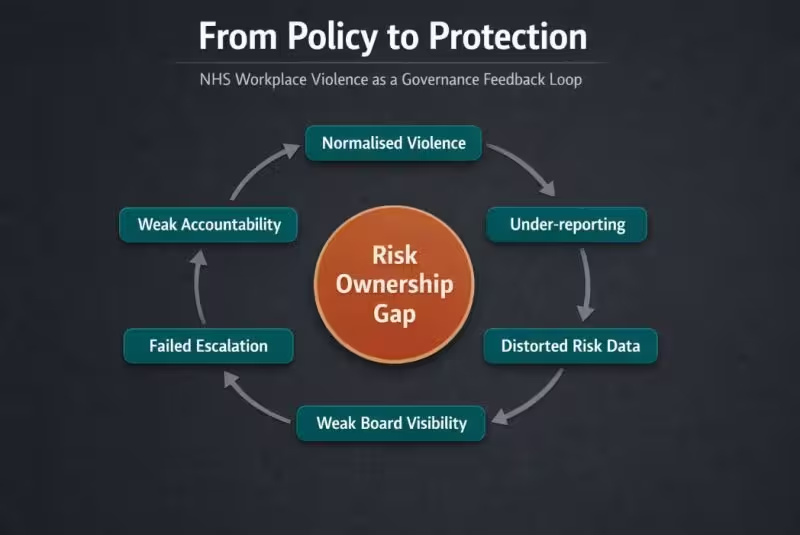
The NHS does not mainly lack policy on workplace violence. It lacks governance systems that turn policy into protection
Workforce Safety 17 March 2026

The NHS does not mainly lack policy on workplace violence. It lacks governance systems that turn policy into protection

A longer article setting out the governance feedback loop behind workplace violence in the NHS, and a five-part framework for testing whether organisations can actually identify, own, escalate, and reduce the risk.

LinkedIn article Read on LinkedIn
The NHS has a policy for everything except making its staff safe
Workforce Safety 6 March 2026

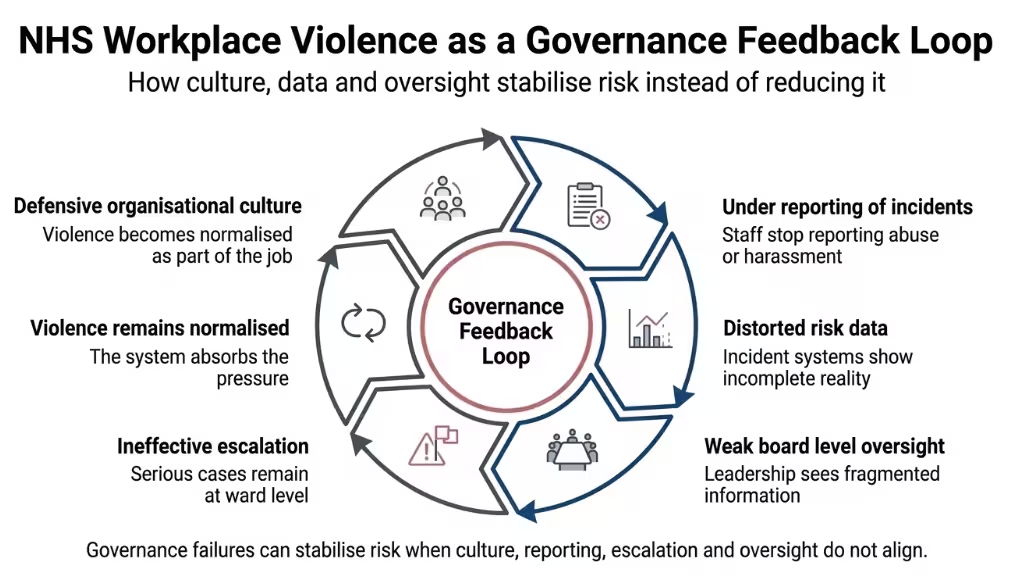
The NHS has a policy for everything except making its staff safe

A longer article arguing that the central failure is not the absence of rules, but the absence of a functioning governance architecture that turns formal commitments into practical protection.

LinkedIn article Read on LinkedIn
One Decision, Three Deaths: What Does the Nottingham Case Reveal About Clinical Risk Management?
Case Reading 24 February 2026

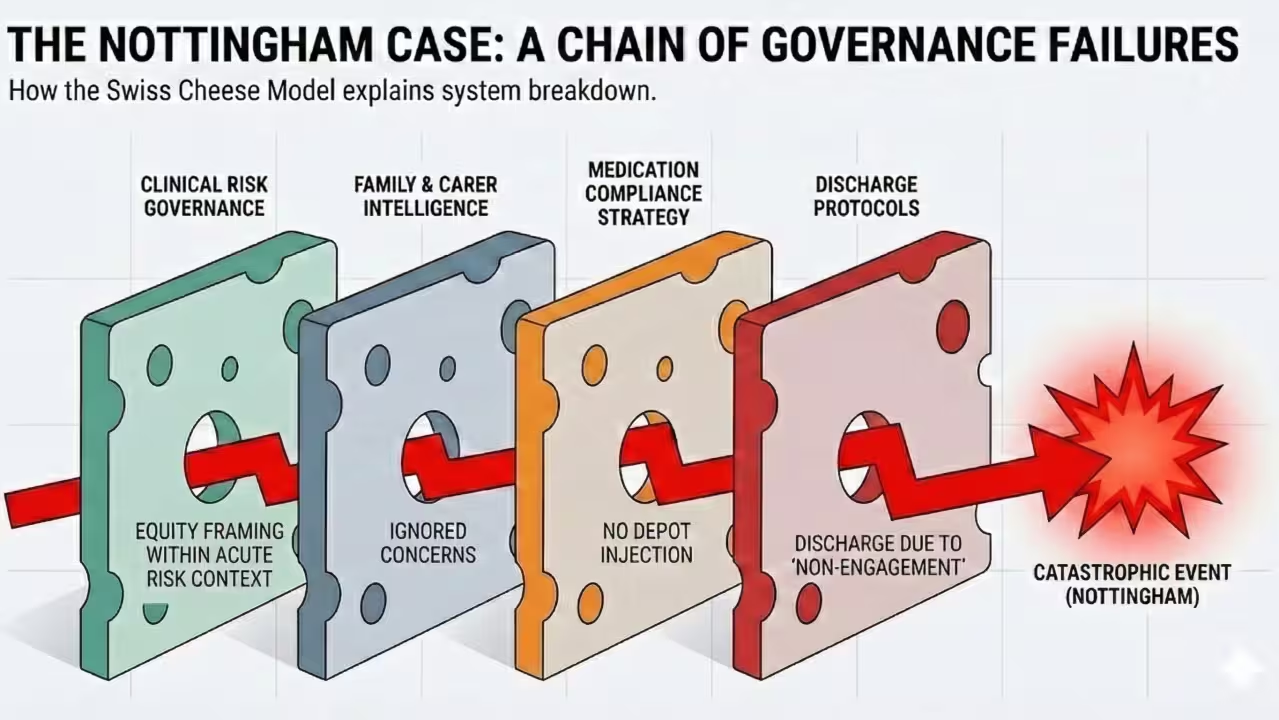
One Decision, Three Deaths: What Does the Nottingham Case Reveal About Clinical Risk Management?

A case reading of the Nottingham killings through prioritisation, decision hierarchy, community care assumptions, and normalised deviance in mental health risk management.

LinkedIn article Read on LinkedIn

Browse archive

Filter by theme or search by title

Archive

All writing

Showing 22 entries

The NHS came perilously close to collapse
Governance 22 March 2026

The NHS came perilously close to collapse

A systems reading of the Covid Inquiry through fragility, overload, and governance failure. The core argument is that the pandemic did not create the weakness. It exposed how vulnerable the NHS already was.

LinkedIn post Read on LinkedIn
Systems do not fail when there is a single error, they fail when signals do not become decisions
Frameworks 20 March 2026

Systems do not fail when there is a single error, they fail when signals do not become decisions

A cross-sector governance piece on what different public failures have in common: visible signals, weak decision architecture, and uncertainty drifting into unmanaged risk.

LinkedIn post Read on LinkedIn
The NHS does not mainly lack policy on workplace violence. It lacks governance systems that turn policy into protection
Workforce Safety 17 March 2026

The NHS does not mainly lack policy on workplace violence. It lacks governance systems that turn policy into protection

A longer article setting out the governance feedback loop behind workplace violence in the NHS, and a five-part framework for testing whether organisations can actually identify, own, escalate, and reduce the risk.

LinkedIn article Read on LinkedIn
Three weekend signals from the NHS that point to a deeper structural problem
Pattern Analysis 16 March 2026

Three weekend signals from the NHS that point to a deeper structural problem

A governance reading across dementia restraint, workforce violence, and hospital infrastructure. Different cases, same deeper pattern: systems under pressure start to normalise risk.

LinkedIn post Read on LinkedIn
40 to 50 avoidable baby deaths in one hospital. What more do we need to take governance seriously?
Safeguarding 10 March 2026

40 to 50 avoidable baby deaths in one hospital. What more do we need to take governance seriously?

A governance response to the Ockenden findings, focused on repeated warning signs, escalation failure, culture, and the moral question of what safety means in practice.

LinkedIn post Read on LinkedIn
Horrorshow at a UK psychiatric hospital. When the system turns against the most vulnerable
Safeguarding 9 March 2026

Horrorshow at a UK psychiatric hospital. When the system turns against the most vulnerable

A case-based piece on assault, neglect, staffing pressure, and failed oversight in mental health care. The argument is that repeated institutional harm cannot be reduced to a few bad actors.

LinkedIn post Read on LinkedIn
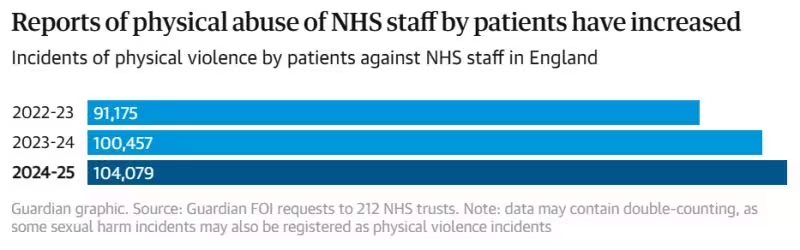
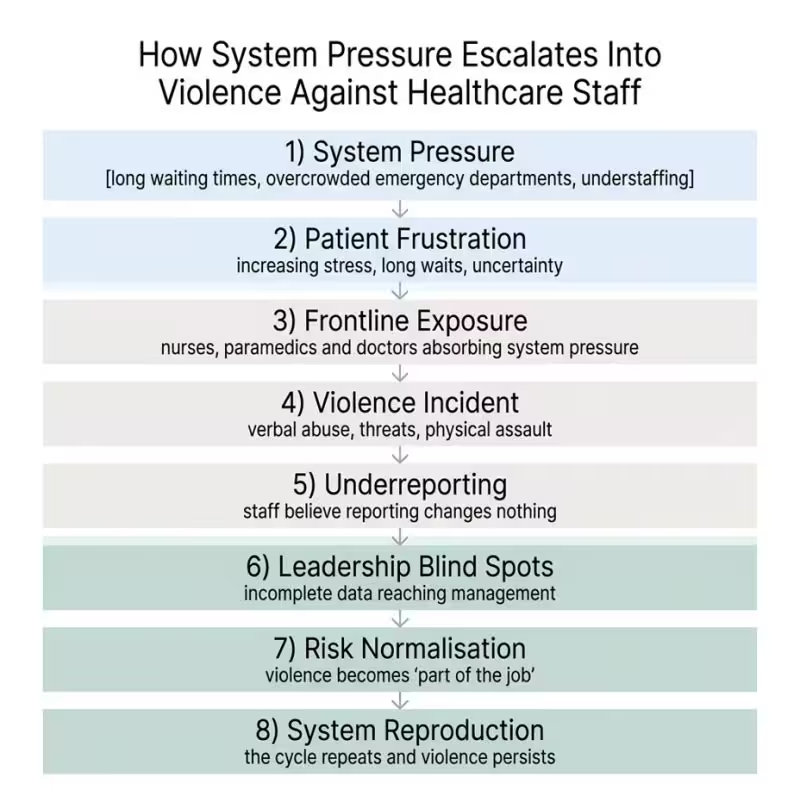
When violence keeps rising, the system cannot pretend it is still a series of incidents
Workforce Safety 8 March 2026

When violence keeps rising, the system cannot pretend it is still a series of incidents

A post on why rising workplace violence should be read as an institutional pattern shaped by recording, classification, escalation, and cultural tolerance, not only frontline behaviour.

LinkedIn post Read on LinkedIn
The NHS has a policy for everything except making its staff safe
Workforce Safety 6 March 2026

The NHS has a policy for everything except making its staff safe

A longer article arguing that the central failure is not the absence of rules, but the absence of a functioning governance architecture that turns formal commitments into practical protection.

LinkedIn article Read on LinkedIn

Workplace Violence in the NHS: A Governance Failure
Workforce Safety 3 March 2026

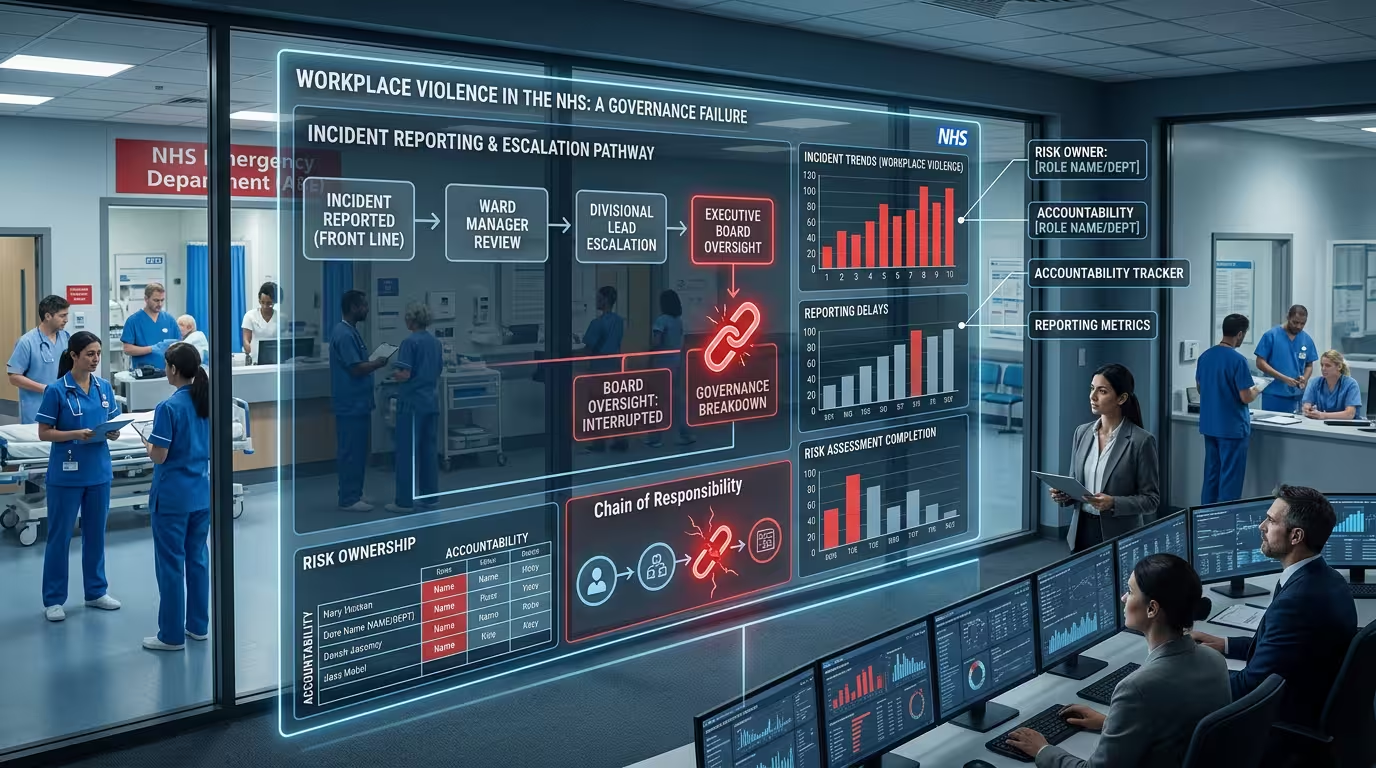
Workplace Violence in the NHS: A Governance Failure

An early article laying out workplace violence as a systemic governance risk, with a focus on fragmented implementation, unclear accountability, and the gap between administrative compliance and meaningful enforcement.

LinkedIn article Read on LinkedIn

In the UK, on average two women die every week as a result of intimate partner violence
Safeguarding 1 March 2026

In the UK, on average two women die every week as a result of intimate partner violence

A public systems and data visibility post written around the Million Women Rise march, asking how much of violence against women never reaches the systems that supposedly respond to it.

LinkedIn post Read on LinkedIn
The dark side of the NHS maternity scandal
Safeguarding 28 February 2026

The dark side of the NHS maternity scandal

A post on record integrity, defensiveness, inequality, and the failure of learning in maternity care. The emphasis is on governance breakdown after harm, not only the initial clinical failure.

LinkedIn post Read on LinkedIn
One Decision, Three Deaths: What Does the Nottingham Case Reveal About Clinical Risk Management?
Case Reading 24 February 2026

One Decision, Three Deaths: What Does the Nottingham Case Reveal About Clinical Risk Management?

A case reading of the Nottingham killings through prioritisation, decision hierarchy, community care assumptions, and normalised deviance in mental health risk management.

LinkedIn article Read on LinkedIn

A Regulatory Pause Is Not Failure. It Is Risk Governance in Action
Governance 23 February 2026

A Regulatory Pause Is Not Failure. It Is Risk Governance in Action

A post on MHRA intervention, paediatric trial safeguards, and what precaution looks like when uncertainty is managed through visible regulatory control rather than messaging.

LinkedIn post Read on LinkedIn
If We Only Act When the Numbers Turn Red, That Is Not Prevention. It Is Firefighting
Pattern Analysis 22 February 2026

If We Only Act When the Numbers Turn Red, That Is Not Prevention. It Is Firefighting

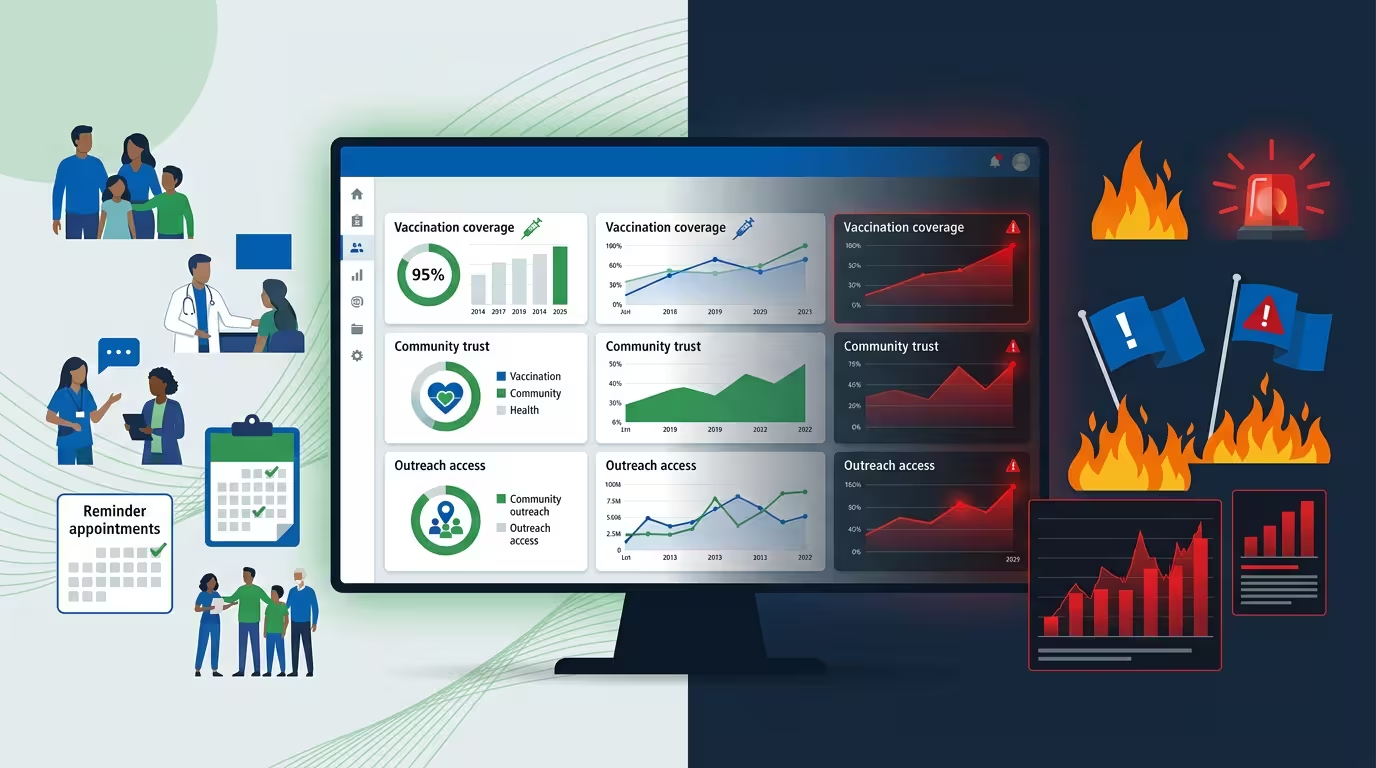
A prevention-focused governance post on falling vaccination coverage, delayed mobilisation, and what it means when public health systems respond only once deterioration becomes visible.

LinkedIn post Read on LinkedIn
The Algorithm Was Faster. Now Politics Is Trying to Catch Up
Safeguarding 21 February 2026

The Algorithm Was Faster. Now Politics Is Trying to Catch Up

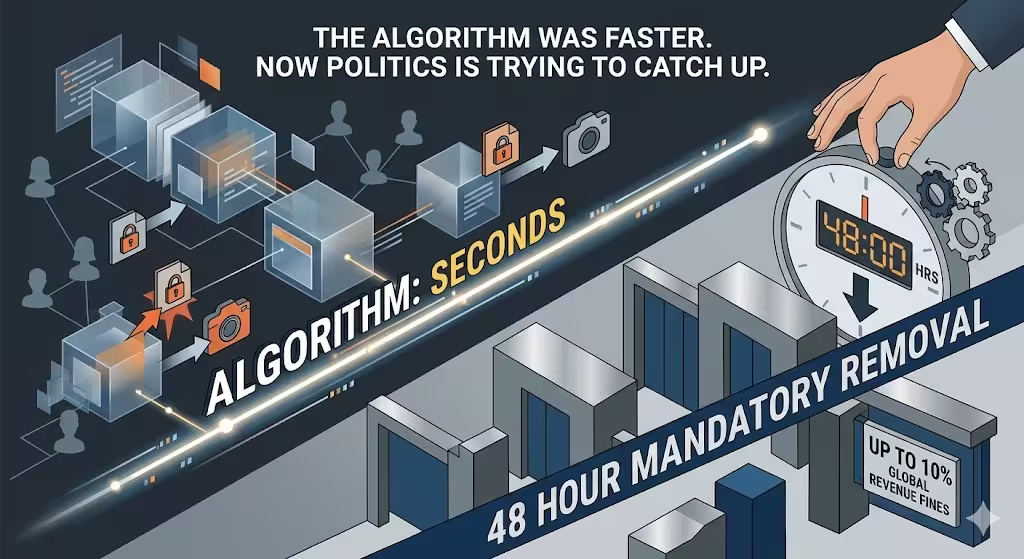
A post on the UK 48-hour removal rule for non-consensual intimate content, asking whether faster deletion is enough when the deeper problem sits in platform design and algorithmic spread.

LinkedIn post Read on LinkedIn
Andrewโ€™s Arrest: Does the System Truly Work at the Top?
Governance 20 February 2026

Andrewโ€™s Arrest: Does the System Truly Work at the Top?

An institutional accountability article using the monarchy as a stress test for rule of law, elite scrutiny, and the difference between reputation management and integrity.

LinkedIn article Read on LinkedIn
1,000 Arrests a Month: When Paedophilia Becomes a System Design Failure
Safeguarding 19 February 2026

1,000 Arrests a Month: When Paedophilia Becomes a System Design Failure

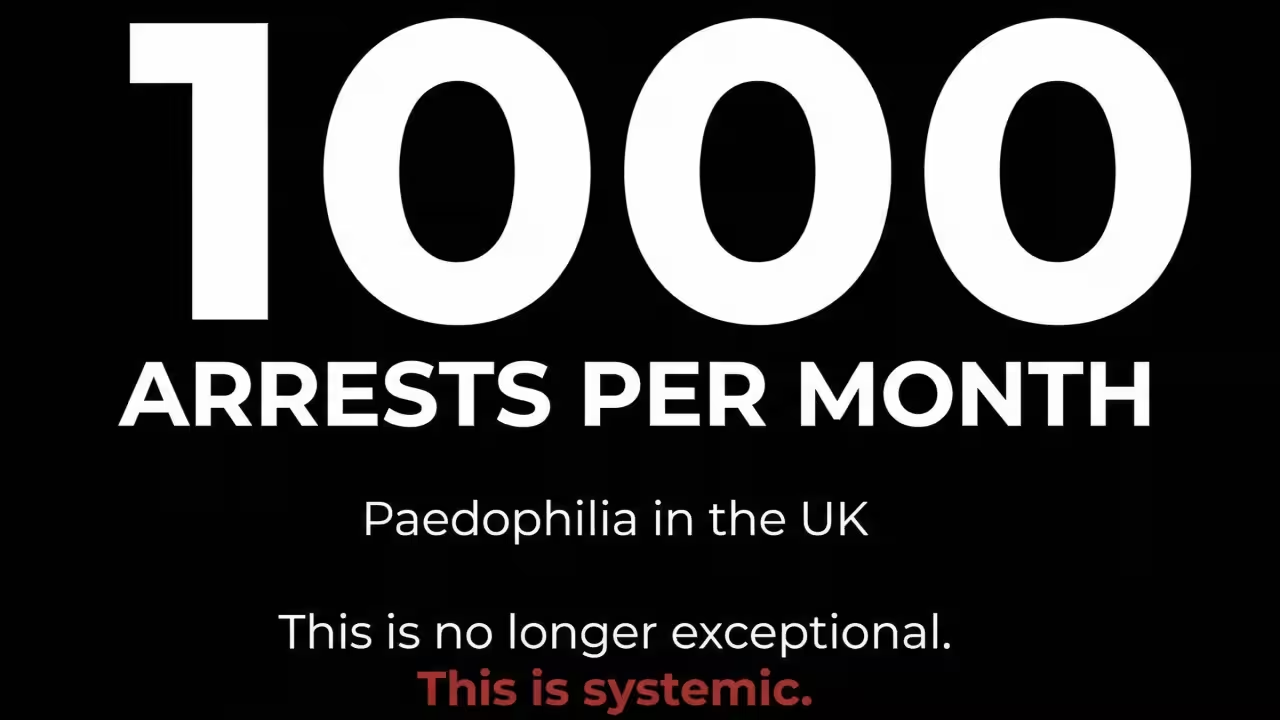
A digital harm article arguing that large-scale child sexual abuse cannot be understood only as an enforcement problem when design incentives and algorithmic amplification accelerate exposure.

LinkedIn article Read on LinkedIn
The NHS Is Not Recovering. It Is Redistributing Risk
Pattern Analysis 16 February 2026

The NHS Is Not Recovering. It Is Redistributing Risk

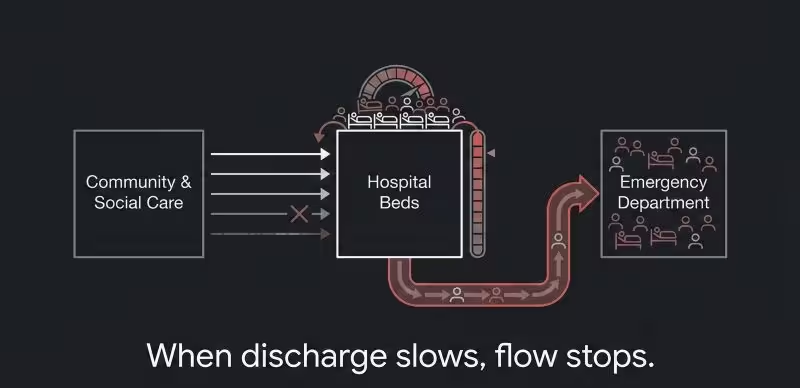
A post on waiting lists, 12-hour A and E delays, bed shortages, and discharge failure, arguing that apparent recovery can mask the movement of risk elsewhere in the system.

LinkedIn post Read on LinkedIn
Permanent Emergency: When Crisis Stops Being a Failure and Becomes a Strategy
Pattern Analysis 15 February 2026

Permanent Emergency: When Crisis Stops Being a Failure and Becomes a Strategy

A broader public systems post arguing that once crisis becomes the operating model, emergency is no longer temporary pressure. It becomes the design.

LinkedIn post Read on LinkedIn
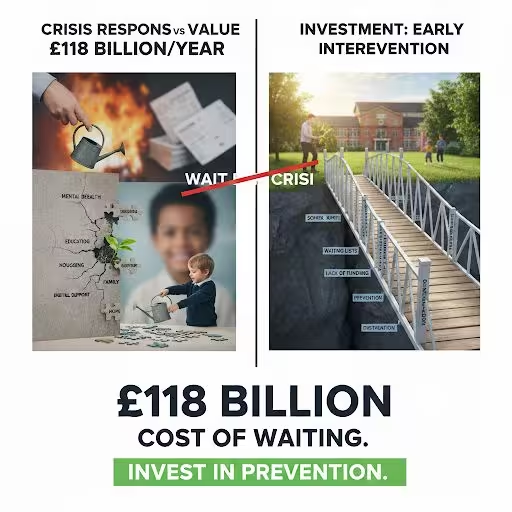
Childrenโ€™s Mental Health Week 2026: Prevention is not optional. It is the only way forward
Safeguarding 5 February 2026

Childrenโ€™s Mental Health Week 2026: Prevention is not optional. It is the only way forward

A prevention and policy post on childrenโ€™s mental health, delayed support, and the economic and human cost of treating crisis as normal instead of investing earlier.

LinkedIn post Read on LinkedIn
When 285 incidents a day become normal, what is really happening to NHS staff?
Workforce Safety 29 January 2026

When 285 incidents a day become normal, what is really happening to NHS staff?

A post on the normalisation of violence, under-reporting as learned survival, and why zero tolerance branding means little without consistent follow-through after incidents.

LinkedIn post Read on LinkedIn
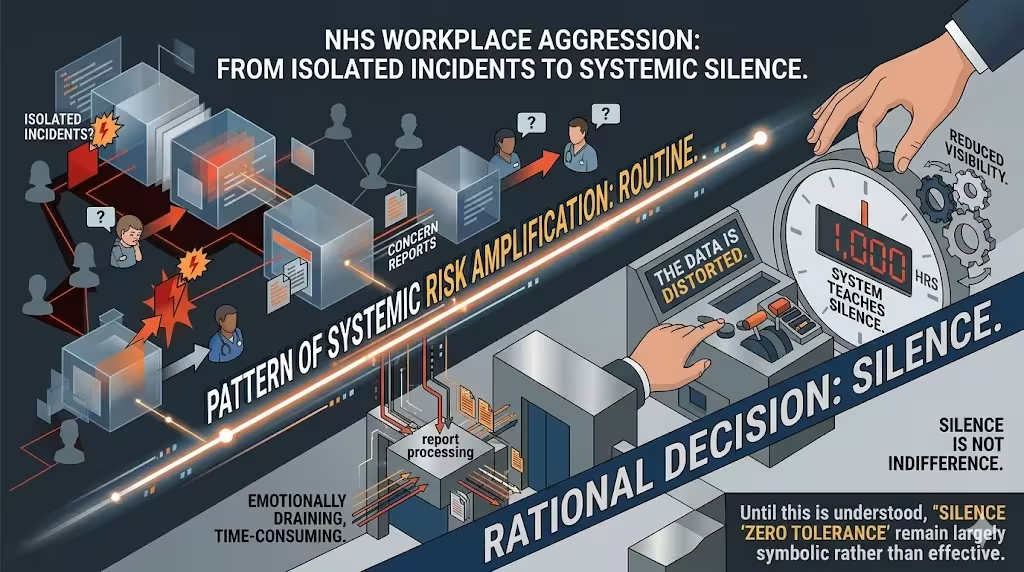
When raising concerns is time-consuming, emotionally draining, and rarely leads to meaningful change, silence is not indifference
Workforce Safety 20 December 2025

When raising concerns is time-consuming, emotionally draining, and rarely leads to meaningful change, silence is not indifference

A short post on why workplace aggression data becomes distorted when reporting systems teach staff that making violence visible is costly and largely futile.

LinkedIn post Read on LinkedIn