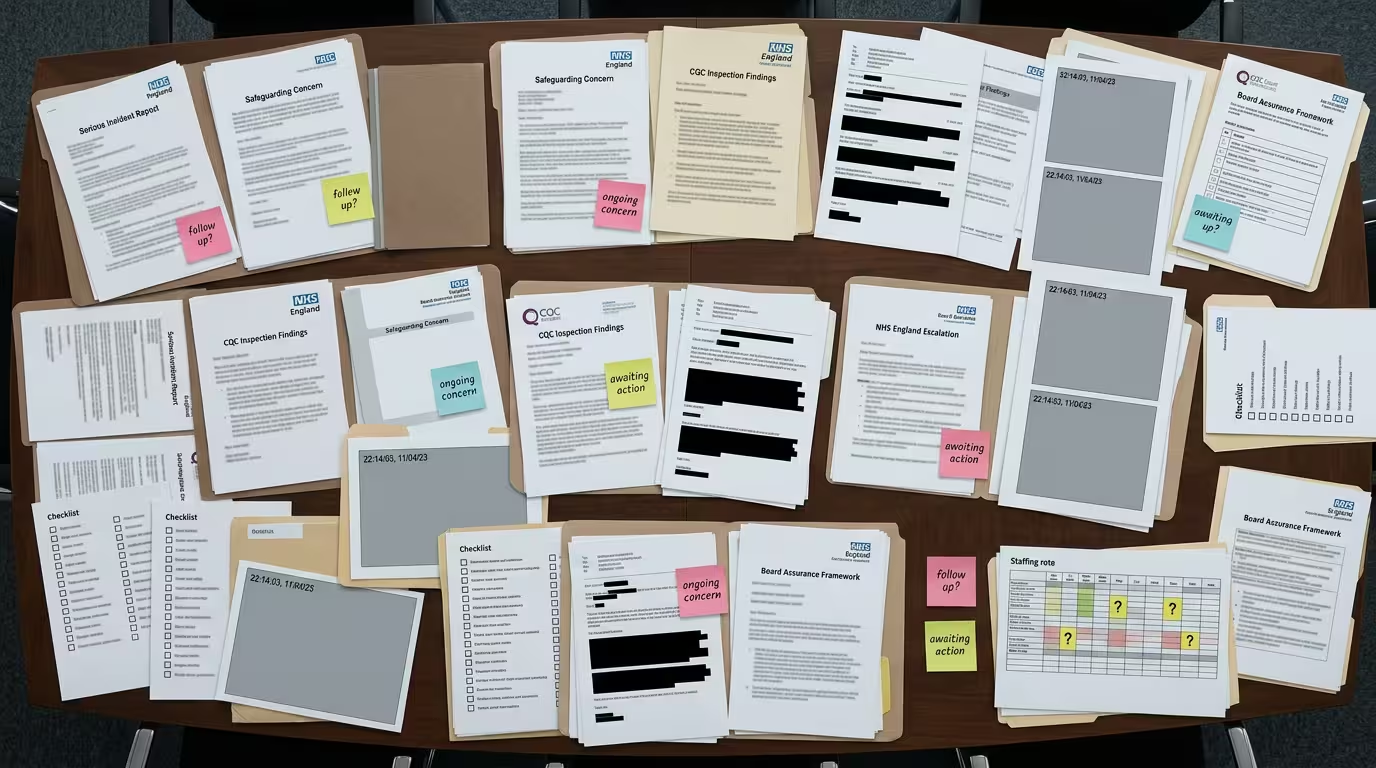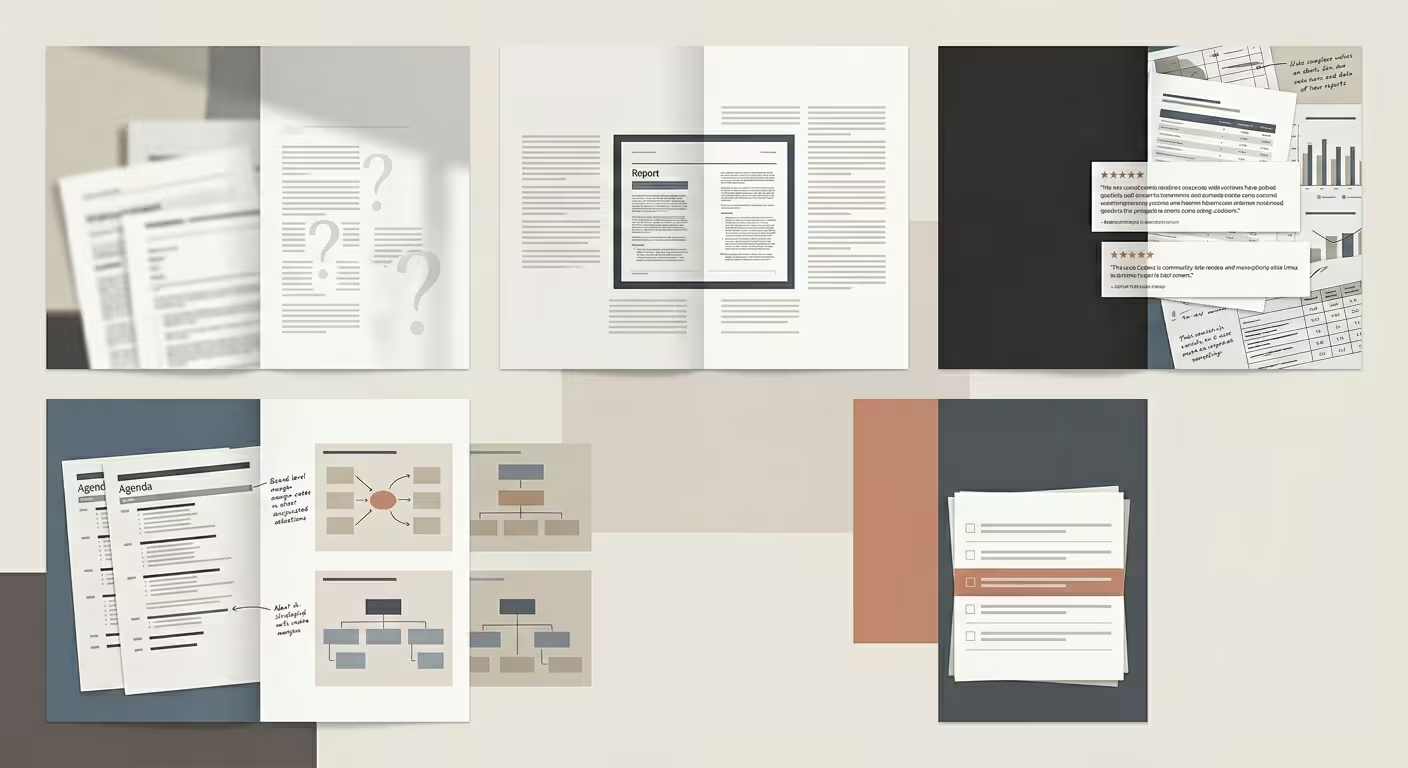
Not every uncertainty needs an outside-in review. Some questions can be answered internally, quickly, and with more direct access than any external reading could provide. But there are situations where public information begins to matter in a more practical way. The issue may still feel vague, the visible picture may be uneven, or leadership may need a calmer and more structured view of how things currently look from outside.
That is where an outside-in review becomes useful. Its role is not to replace internal assurance or to act like an inspection. Its role is narrower and more practical than that. It helps decision-makers read the visible public footprint around a provider, service, or group more clearly, so they can judge where further attention may be worth giving.
1. When something feels slightly off, but the issue is still unclear
This is one of the most common starting points. Nothing may look dramatic on its own, but the visible picture no longer feels fully settled. There may be a shift in tone across public material, a growing mismatch between different sources, or a sense that the organisation's outward story is becoming less easy to reconcile.
At this stage, an outside-in review is useful because it helps turn a vague concern into a more structured reading. It does not force certainty too early. It helps clarify whether the visible signals are isolated, loosely connected, or beginning to point in the same direction.
2. When leadership wants a clearer external view of one location or service
Sometimes the question is quite specific. Leadership may want to understand how one home, one service line, or one part of a wider organisation currently appears from the outside. The internal picture may feel familiar, but the public-facing picture may be less clear.
In that situation, an outside-in review can help by narrowing the scope and reading the visible material around that location or service carefully. This is often more useful than jumping too quickly into a broad organisational reading when the immediate question is still quite focused.
3. When a strong reputation may be making the wider picture harder to read
A positive reputation can be a real asset, but it can also make weaker signals easier to overlook. Good reviews, a stable brand, warm public language, or long-standing local trust may create reassurance that is partly justified and partly incomplete.
An outside-in review is useful here because it places that reassurance in context. It helps leadership ask whether the positive public picture is broadly aligned with other visible signals, or whether it may be masking a more uneven external footprint than first appears.
4. When boards or senior teams need a better starting point for discussion
Some governance conversations are weakened by lack of structure rather than lack of concern. People sense that something may need attention, but the discussion stays too broad, too reactive, or too dependent on individual interpretation.
A short, well-framed outside-in review can be useful because it gives the discussion a clearer external reference point. It does not settle the matter, but it can improve the quality of board or senior team questions by showing where the public picture looks coherent, where it looks uneven, and where uncertainty still sits.
5. When the main need is prioritisation, not full-scale investigation
Sometimes leadership is not asking for a definitive answer. The real question is where to look first. There may be several possible concerns, limited time, and no clear basis yet for deciding which issue deserves closer checking.
In that situation, an outside-in review is useful because it helps prioritise attention. It reads the visible public signals in proportion and shows which parts of the picture appear broadly settled and which may justify deeper internal follow-up. That can be enough to support a better next step without pretending the work has already gone further than it has.
Why these situations matter
What these five situations have in common is that they sit in the space before certainty. The organisation is not necessarily facing a formal crisis, and the purpose is not to produce a formal judgement. The need is more practical than that. Leaders want a clearer, more disciplined reading of what is visible from outside, so that internal attention can be directed more intelligently.
This is where outside-in work is often most useful. It helps make diffuse public information more readable without overstating what that information proves. That balance matters. If the reading is too weak, it adds little. If it is too strong, it starts claiming certainty that public material cannot support on its own.
When this kind of review is the right fit
An outside-in review is usually the right fit when the visible picture matters, the internal question is still forming, and leadership wants a clearer basis for judgement before moving to deeper work. It is especially useful when the issue is not yet fully defined, but the public footprint suggests that waiting for perfect clarity may not be the best option.
Used well, it becomes a practical decision-support tool. It helps leaders see the public-facing picture more clearly, ask better internal questions, and decide where more attention is actually warranted.
In practice
Pattern Scope works in exactly this space. The aim is not to turn every concern into a major review. It is to provide a structured outside-in reading when that level of work is the most useful next step. In the right situation, that can be enough to clarify the visible picture, sharpen internal discussion, and make the next decision easier to take.
Pass on the canonical article link in the format people already use.
Get alerts on this device when new writing lands.
Turn on browser notifications for fresh articles and high-signal editorial drops. On iPhone or iPad, install the app to the Home Screen first.
No inbox clutter. This browser or installed web app becomes the endpoint.
Recommended next step
Want this applied to a live provider context?
Pattern Scope turns public-source review into a structured outside-in reading for decision-makers who need to know where to look more closely.