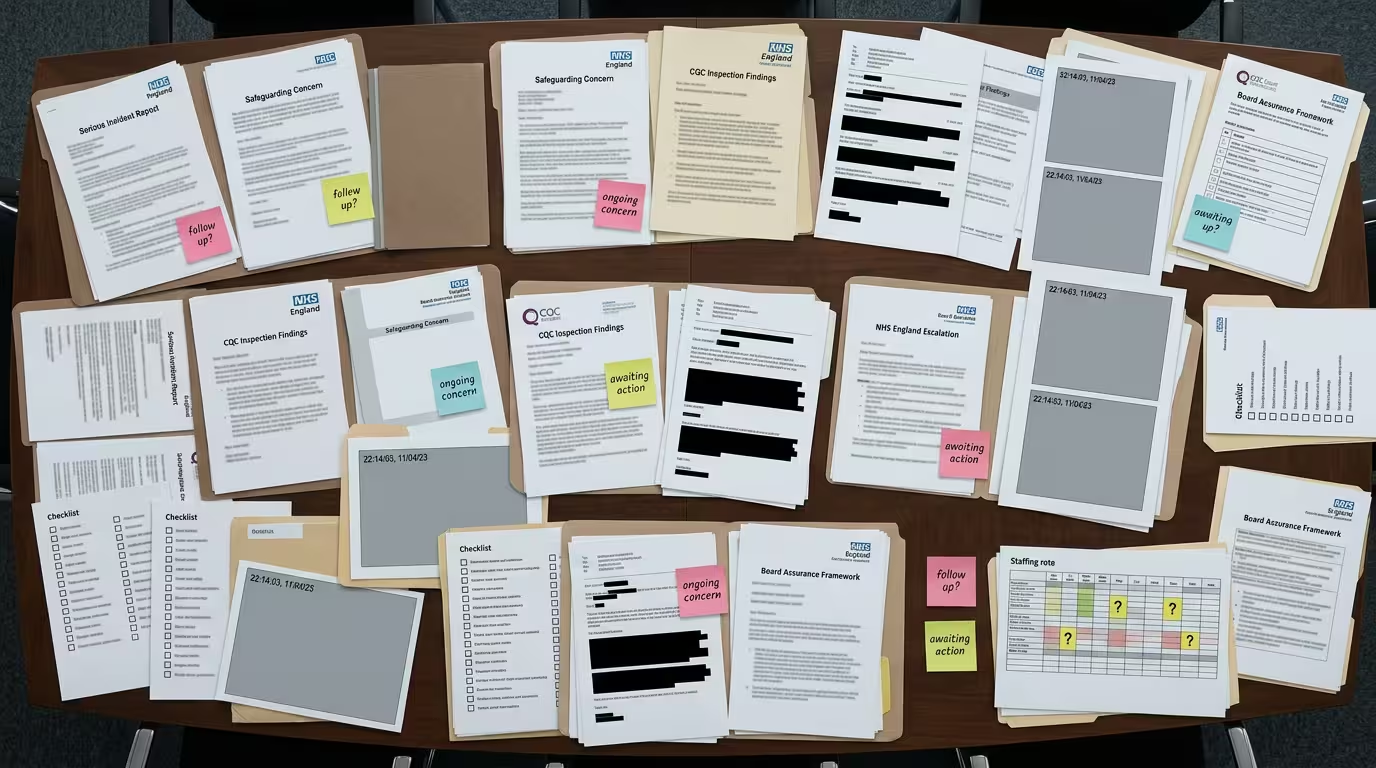
Governance problems do not usually begin as fully formed crises. More often, they begin as scattered signals, minor inconsistencies, visible gaps, or questions that do not yet feel serious enough to trigger formal escalation. That is one reason early attention matters so much. Once a problem is obvious, it is often already more difficult to contain, explain, or respond to calmly.
Public information can be useful in that earlier stage. It does not replace internal reporting, internal assurance, or direct operational knowledge. But it can help leadership see how the organisation appears from outside, where the visible picture looks settled, and where it may already be showing signs of drift, ambiguity, or unevenness.
Why governance attention is often delayed
Inside organisations, attention is limited and context is fragmented. Different teams hold different parts of the picture. One area may see staffing pressure, another may notice communication strain, another may sense reputational sensitivity, and none of those pieces alone may look sufficient to define a wider issue.
There is also a natural tendency to absorb weaker signals into the normal background of organisational life. If no single event appears decisive, early signs of strain can remain diffuse for longer than they should. By the time the concern is clearly named, the public-facing picture may already be less stable than leadership realised.
What public information can do
Public information is useful because it provides a different angle of visibility. It does not show everything, but it shows what external readers can already see and interpret for themselves. That matters because public-facing signals do not wait for internal consensus before they begin shaping perception.
Used carefully, public information can help leadership:
- notice visible inconsistencies earlier, especially where different public signals do not fully align
- spot drift in public narrative, where the organisation's outward story becomes harder to reconcile with visible evidence
- recognise unevenness across locations or entities, particularly where one part of a wider group begins to look different from the rest
- see ambiguity more clearly, especially where the public picture feels incomplete, confusing, or harder to read than it should
- improve the timing of internal questions, so that attention is directed before visible concerns become harder to manage
The value is not that public information settles the issue. The value is that it can help bring earlier structure to the organisation's attention.
Why earlier attention matters
Earlier governance attention changes the quality of decision-making. It allows leaders to ask better questions before positions harden, before reputational strain deepens, and before weak signals turn into more expensive problems.
That is especially important in care settings, where visible reassurance can coexist with underlying pressure for some time. An organisation may still look warm, stable, and trusted on the surface while more subtle public signals begin to suggest that parts of the picture are becoming less coherent. If leadership waits until those signals become obvious to everyone, the opportunity for quieter, earlier response may already have passed.
Earlier attention does not mean overreaction. It means being willing to notice that uncertainty itself can be decision-relevant.
What public information may help bring into view
Depending on the scope, public information may help bring attention to issues such as:
- repeated low-level concern across different public sources, even where no single signal is dramatic
- misalignment between public claims and public support, where the outward narrative looks stronger than the visible evidence around it
- regulatory patterning, where themes repeat over time in a way that deserves closer internal reflection
- public-facing leadership uncertainty, where accountability, continuity, or visible ownership becomes harder to read
- group-level masking, where a strong wider reputation may obscure a more uneven picture at site or entity level
None of these patterns proves the full internal reality. But they may still be useful reasons to look more closely, sooner rather than later.
How to use public information well
The key is to use public information as an attention tool, not as a substitute for internal judgement. It should help direct scrutiny, frame questions, and highlight where the visible picture may justify deeper internal checking.
That usually means reading across sources rather than reacting to one fragment. A single review, one leadership change, or one public statement may say very little on its own. A broader pattern across regulatory material, provider narrative, public feedback, leadership visibility, and structural information is usually more decision-useful.
It also means staying honest about limits. Public information can reveal external visibility. It cannot verify internal practice, confirm current control strength, or settle what leadership already knows and is managing privately.
How not to use it
Public information becomes less useful when it is forced to carry more certainty than it reasonably can. It should not be used as if it were direct proof of internal failure. It should not be treated as a replacement for internal review, audit, or operational oversight. And it should not be dismissed simply because it is partial.
The stronger approach sits between those two extremes. It takes public information seriously enough to notice pattern and ambiguity, but not so aggressively that every visible inconsistency is treated as a final conclusion.
In practice
Pattern Scope works with public information in this earlier-attention way. The purpose is not to dramatise what is visible, but to organise it clearly enough that leadership can see where the public picture appears aligned, where it does not, and where closer internal attention may be worth giving.
That is often the practical value of outside-in work. It helps public information do what it does best: not replace internal knowledge, but support earlier governance attention before uncertainty becomes harder to ignore or more costly to leave unnamed.
Pass on the canonical article link in the format people already use.
Get alerts on this device when new writing lands.
Turn on browser notifications for fresh articles and high-signal editorial drops. On iPhone or iPad, install the app to the Home Screen first.
No inbox clutter. This browser or installed web app becomes the endpoint.
Recommended next step
Want this applied to a live provider context?
Pattern Scope turns public-source review into a structured outside-in reading for decision-makers who need to know where to look more closely.