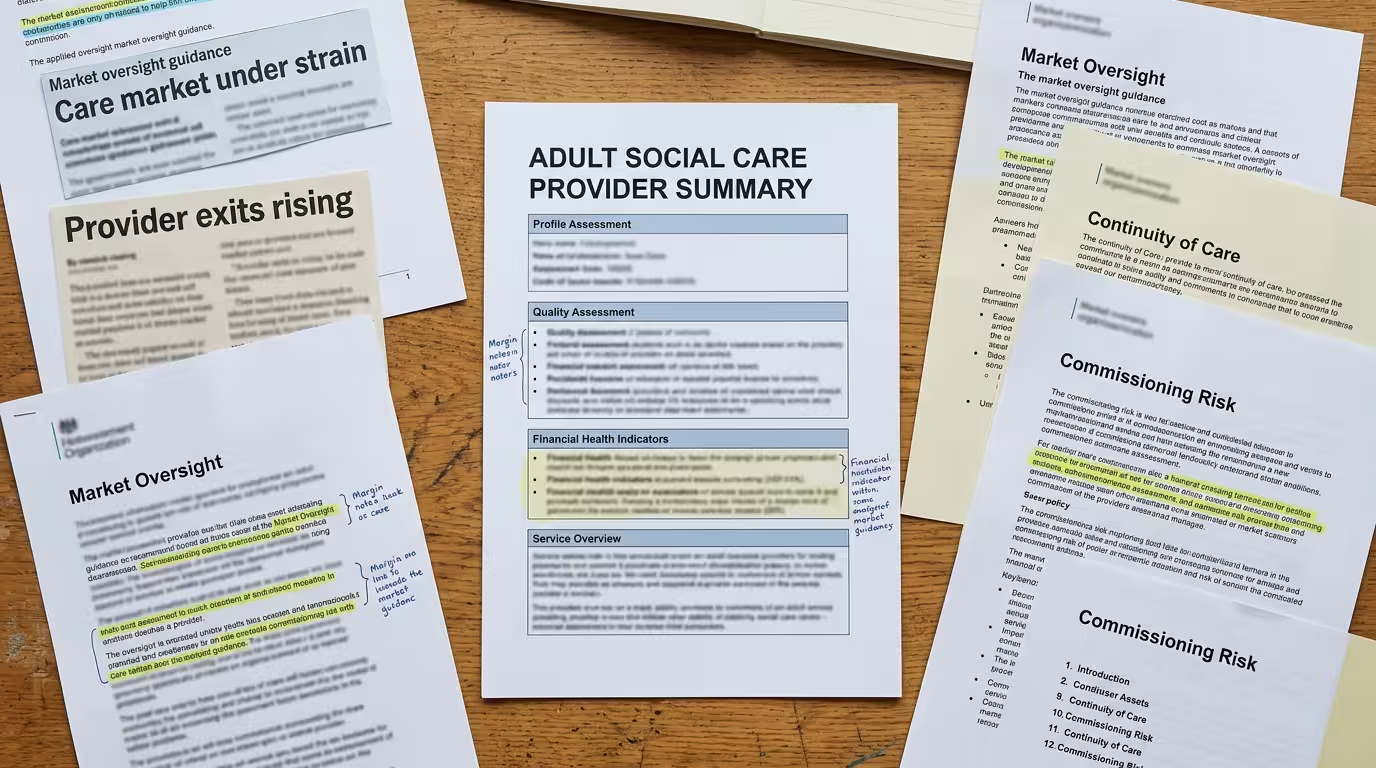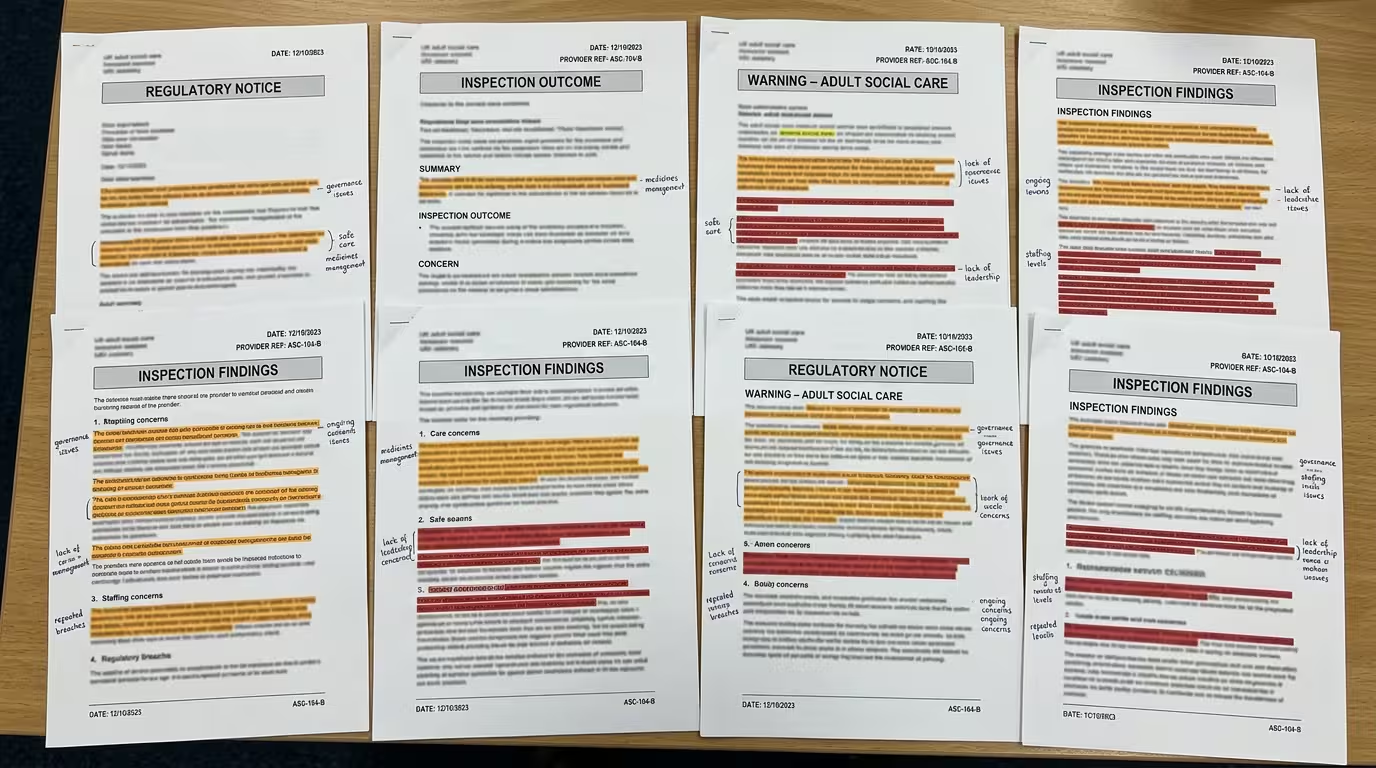
A care provider can be well spoken of in public and still have a more uneven regulatory picture. Families may describe the service warmly. Online reviews may be strong. The provider's public narrative may feel stable, confident, and reassuring. At the same time, CQC findings may point to weaknesses, repeated concerns, or a level of performance that looks less secure than the public reputation suggests.
That kind of gap is uncomfortable because it invites a false choice. Some readers respond by trusting the public reputation and downplaying the findings. Others do the opposite and assume that warm public feedback must be shallow or misleading. Neither response is especially useful. The more serious question is how to read the difference properly.
Why the gap happens
The gap exists because CQC findings and public reputation are not measuring exactly the same thing. They come from different vantage points, different forms of evidence, and different ways of judging what matters.
Public reputation is usually shaped by visible experience. Families notice communication, kindness, atmosphere, accessibility, responsiveness, and whether they feel able to trust the service. That can produce a genuinely positive reputation, especially where staff effort is visible and relationships feel strong.
CQC findings work differently. They reflect formal inspection activity, regulatory judgement, and structured assessment against specific domains. That may bring into view issues that are less obvious in everyday public experience, including governance weakness, documentation problems, leadership concerns, or patterns that are not immediately visible to families.
The result is that both sides may be showing something real, but not the same layer of reality.
What public reputation can show
Public reputation can tell you important things about how a provider is experienced from the outside. It may show that people feel listened to, that staff appear caring, that communication is strong, or that day to day interactions leave families reassured. It can also reflect trust built over time, especially where the provider is locally known and visibly engaged.
None of that should be dismissed. A strong public reputation may indicate that important aspects of visible care experience are working well. It may also show that the provider has earned real goodwill in the eyes of those closest to the service.
What CQC findings can show
CQC findings can bring a different kind of visibility. They may show where governance structures are weaker than the public-facing picture suggests, where repeated concerns have not been fully resolved, or where leadership and oversight look less robust under formal review than they do in outward narrative.
They may also show issues that do not surface easily in public praise. A service can feel warm, humane, and responsive while still carrying weaknesses in record keeping, risk management, leadership consistency, or governance follow-through. That does not make the public praise untrue. It means the praise is not the whole picture.
How the gap is often misread
The most common mistake is to assume that one side must cancel out the other. If the reputation is good, some people assume the findings must be overly harsh or outdated. If the findings are concerning, others assume the reputation must be superficial or naïve.
That approach weakens judgement. A gap between CQC findings and public reputation is usually more useful when treated as a reading problem rather than a loyalty test. The question is not which side to believe in the abstract. The question is what each side may be revealing, and why they do not sit together as neatly as expected.
What the difference may signal
When the gap becomes visible, it may suggest several things.
- different layers of performance are being seen by different audiences
- visible experience is stronger than formal governance visibility
- improvement may be uneven, with some public-facing strengths sitting alongside weaker regulatory assurance
- the public narrative may be more settled than the underlying evidence picture
- timing may matter, especially where public reputation reflects recent experience but formal findings reflect an earlier inspection window
None of these explanations should be assumed automatically. But the visible difference is often enough to justify closer reading rather than quick reassurance.
How to read the gap without oversimplifying it
A better reading begins by holding both sides in view at the same time. Public reputation is meaningful. CQC findings are meaningful. The task is to understand how they relate, where they differ, and what kind of uncertainty that difference creates.
It helps to ask questions such as:
- Is the positive public reputation broad and consistent, or narrow and selective?
- Are the CQC concerns isolated, repeated, historic, or still visibly relevant?
- Does the provider's public narrative acknowledge difficulty, or only present reassurance?
- Is the gap likely to reflect timing, uneven improvement, or a deeper pattern of misalignment?
This kind of reading is more demanding than simply choosing one side. But it is also more useful. It helps leadership understand where the visible picture is coherent, where it is mixed, and where closer internal attention may be warranted.
Why this matters in governance terms
For boards, owners, and senior teams, the real risk is not that a gap exists. The real risk is failing to notice what the gap may be saying about visibility, assurance, and external trust. If public reputation and regulatory findings are pulling in different directions, that may be telling leadership something important about how the organisation is being read from outside.
That matters because visible inconsistency can create false reassurance. A provider may feel reputationally secure while the wider public evidence picture is less settled than assumed. Equally, leaders may become defensive about findings without recognising that public trust and regulatory assurance are describing different parts of the same provider.
In practice
Pattern Scope reads this kind of gap as a signal worth interpreting, not a contradiction to be flattened. The aim is to understand how public reputation, public narrative, and formal findings sit together in the visible footprint around a provider.
That outside-in reading can be especially useful when the public-facing picture feels stronger than the formal findings, or when leadership wants a calmer and more structured understanding of what the visible difference may actually mean. The goal is not to choose between two stories too quickly. It is to read the relationship between them properly.
Pass on the canonical article link in the format people already use.
Get alerts on this device when new writing lands.
Turn on browser notifications for fresh articles and high-signal editorial drops. On iPhone or iPad, install the app to the Home Screen first.
No inbox clutter. This browser or installed web app becomes the endpoint.
Recommended next step
Need this read against a live provider context?
Use the service homepage when the next step is turning a CQC-and-reviews mismatch into a scoped external review decision.