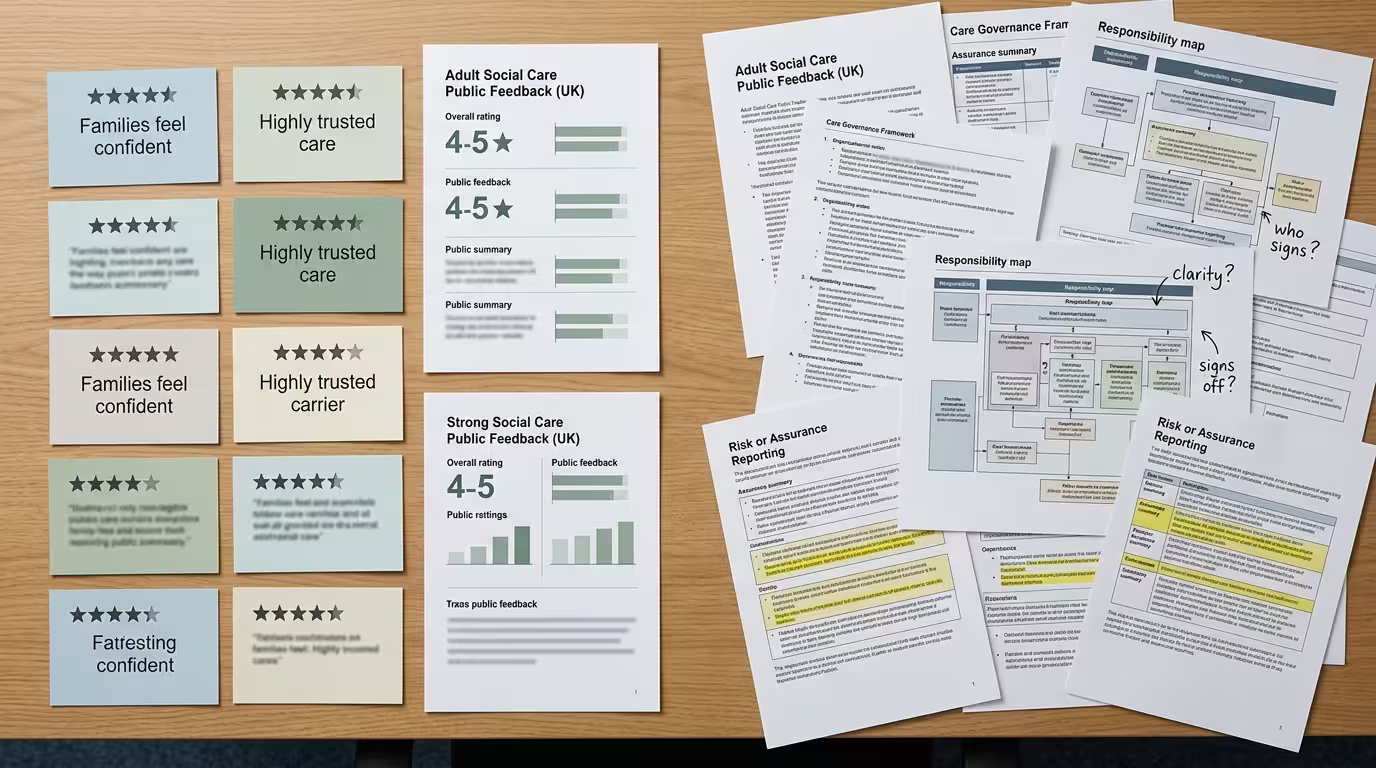
Public trust matters. In adult social care, it can be built through compassion, consistency, communication, and the visible quality of day to day experience. Families may feel reassured. Communities may speak well of a provider. Reviews may be warm. The organisation may appear thoughtful, stable, and decent in the way it presents itself publicly. All of that can be real.
But public trust and governance clarity are not the same thing. A provider can be well trusted while still presenting a governance picture that is harder to read clearly from the outside. That distinction matters because trust often feels like reassurance, while governance clarity is about something more structural: how legible responsibility, oversight, consistency, and visible accountability appear in the wider public footprint.
What public trust can show
Public trust can show that important things are working. It may reflect kindness in care, strong family communication, visible staff commitment, or a provider that has built confidence over time through everyday experience. Trust can also indicate that the organisation has a credible public presence and that people feel able to rely on what they see.
None of that should be minimised. Trust is valuable in its own right. It affects confidence, relationships, and how the provider is understood by those closest to it. In many cases, public trust is earned through real strengths in the way care is experienced and communicated.
What governance clarity means
Governance clarity is different. It is not mainly about whether people feel reassured. It is about whether the visible public picture makes it reasonably clear how the organisation holds responsibility, how oversight appears to work, how consistent the provider looks across its footprint, and whether public signals broadly support the outward story being told.
A governance picture can look clear when the public footprint appears coherent, aligned, and legible across multiple layers. It becomes less clear when responsibility is harder to trace, public signals pull in different directions, local variation is harder to reconcile, or the outward narrative feels more settled than the wider visible evidence beneath it.
Why the two are often confused
They are often confused because trust is emotionally persuasive. Once an organisation feels warm, dependable, and well regarded, it is easy to let that trust do more work than it should. A strong reputation can begin to stand in for a wider reading of governance, even though it was not built to do that job.
This is especially common where public experience is positive and the provider communicates well. In that setting, weak signals elsewhere may attract less attention because the general tone still feels reassuring. Trust then starts to smooth over visible ambiguity that deserves a more separate reading.
What can happen when trust is stronger than governance clarity
When trust is stronger than governance clarity, the provider may still look stable and credible overall while parts of the visible public picture remain harder to interpret. That can happen in several ways.
- public experience may feel stronger than visible oversight
- group reputation may look more settled than location-level consistency
- positive reviews may carry more reassurance than the wider public evidence supports
- leadership may appear trustworthy without the wider accountability picture being equally legible
- public confidence may remain high while visible governance signals look mixed or incomplete
None of this means trust is misplaced. It means trust and governance clarity are describing different dimensions of the provider. One concerns confidence and lived reassurance. The other concerns visible structure, alignment, and oversight legibility.
Why the distinction matters for leadership
For boards, owners, and senior leaders, this distinction matters because governance decisions should not rely too heavily on one kind of signal. Trust is important, but it is not a substitute for reading the wider visible evidence picture carefully.
If leadership allows public trust to stand in for governance clarity, some questions may be asked too late. The organisation may feel reputationally secure while parts of the public footprint are less coherent than assumed. That can create a soft form of false reassurance, not because the trust is wrong, but because it is being asked to answer a different question.
How to read the difference more carefully
A better reading keeps both layers in view at once. It asks what the trust is telling you, and separately asks whether the governance picture is equally clear. Those are related questions, but they are not identical.
It can help to ask:
- What is the public trust mainly built on?
- Does the wider public footprint support that reassurance consistently?
- Are responsibility and oversight easy to read across the visible structure?
- Where does the public picture feel warm but structurally less clear?
These questions do not challenge trust for the sake of it. They help leadership avoid collapsing confidence and clarity into one undifferentiated judgement.
Why outside-in reading is useful here
From inside the organisation, trust and clarity can feel more naturally connected than they may appear from outside. Internal context helps explain why people trust the provider, how decisions are made, and where accountability sits even when the public picture is thinner. External readers do not have that context.
An outside-in reading helps because it looks at the public footprint on its own terms. It asks whether the visible signals around the provider support both trust and governance clarity, or whether trust has become the stronger of the two. That is a useful distinction when leadership wants to understand not just whether the organisation is well regarded, but whether it is also clearly legible from the outside.
In practice
Pattern Scope uses this distinction to avoid a common reading error. A provider can be genuinely trusted and still present a governance picture that is less clear than the public reassurance suggests. The task is not to undermine trust. It is to understand whether trust is being supported by an equally coherent public structure of signals, responsibilities, and visible oversight.
That can be especially useful where the outward tone around a provider feels strong and settled, but the wider public footprint appears more layered or less aligned when read closely. In those cases, outside-in reading helps separate confidence from clarity and shows where further internal attention may be worth giving.
Pass on the canonical article link in the format people already use.
Get alerts on this device when new writing lands.
Turn on browser notifications for fresh articles and high-signal editorial drops. On iPhone or iPad, install the app to the Home Screen first.
No inbox clutter. This browser or installed web app becomes the endpoint.
Recommended next step
Want this applied to a live provider context?
Pattern Scope turns public-source review into a structured outside-in reading for decision-makers who need to know where to look more closely.