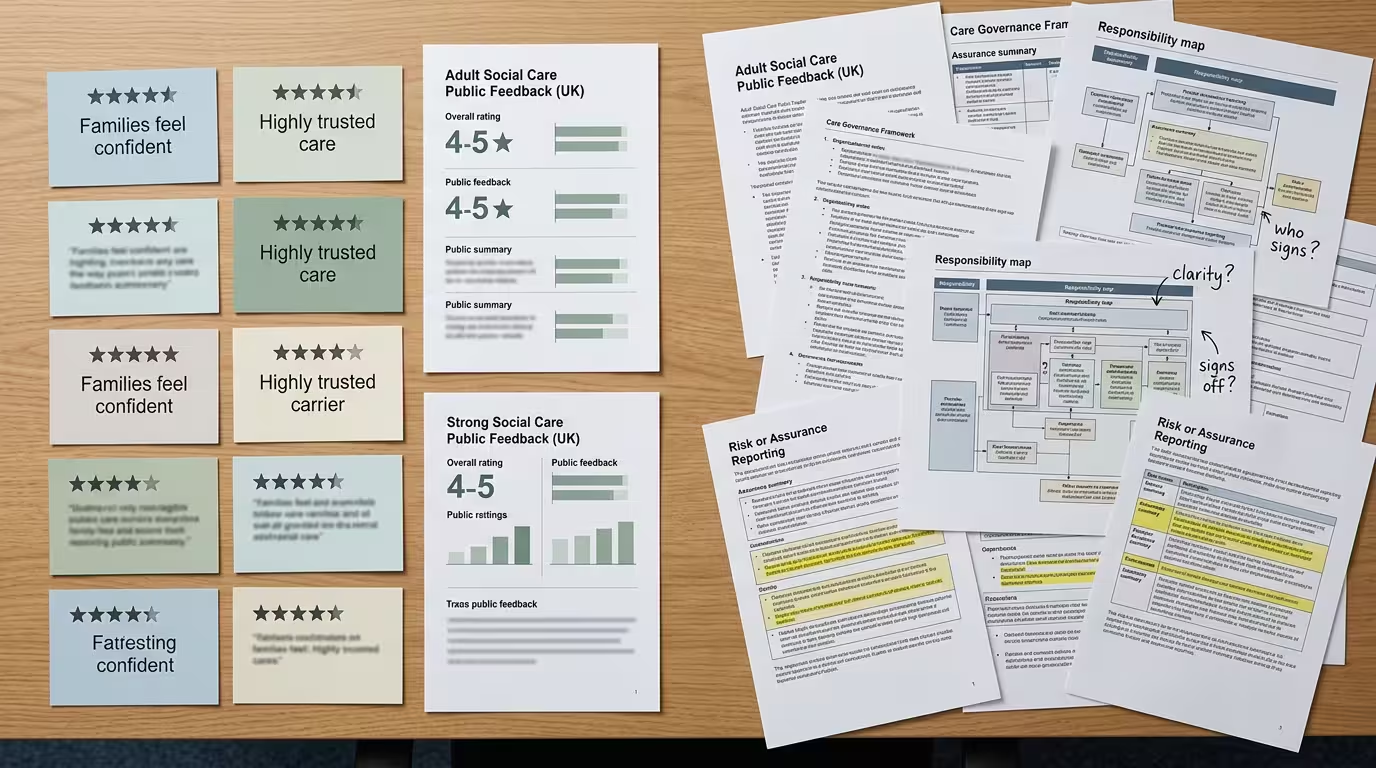
Large provider groups are often described in simple terms from the outside. They appear as one organisation, one brand, one story, or one provider footprint. That is understandable. External readers usually begin with the public-facing identity of the group rather than the legal, operational, or governance structure underneath it.
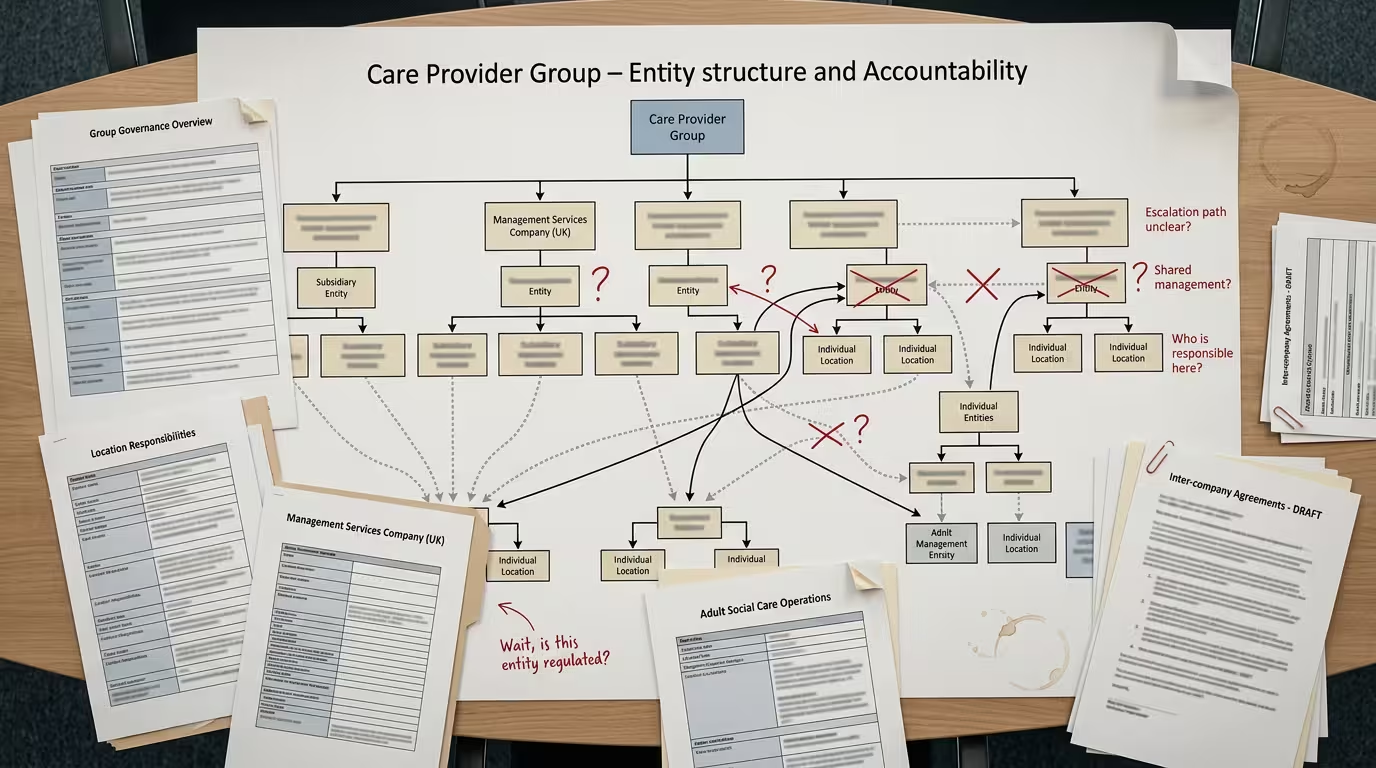
But in multi-entity provider groups, responsibility is not always that simple. Different legal entities, service lines, ownership layers, or operational arrangements can sit behind one outward-facing provider story. That does not automatically mean accountability is poor. It does mean the visible picture of who holds responsibility, where it sits, and how clearly it can be traced may be less straightforward than the group-level narrative suggests.
Why this matters in provider groups
In adult social care, accountability matters not only in formal governance terms but also in how the organisation is read from outside. If the provider structure is complex, and the public footprint stays at a much simpler group level, external visibility may become thinner exactly where clarity matters most.
This is especially relevant when public signals begin to diverge across locations, leadership layers, or entities. At that point, the question is no longer just what the group stands for. It is also who appears to own which part of the picture, where responsibility is visibly anchored, and whether external readers can follow that structure with reasonable confidence.
How accountability blur develops
Accountability blur usually develops through complexity rather than secrecy. A group may grow over time, add services, operate through several entities, or separate different parts of responsibility for legal, operational, or commercial reasons. Each of those choices may make sense in its own terms.
The difficulty comes when the visible public picture remains too compressed while the underlying structure becomes more layered. The result is that the group appears unified at the surface, but responsibility underneath is harder to read clearly from outside.
That blur may become more visible when:
- different entities operate under one wider brand
- site-level, group-level, and ownership-level roles are not easy to distinguish publicly
- leadership visibility is stronger at one level than another
- one part of the organisation looks more uneven, but it is unclear where accountability for that unevenness visibly sits
- public narrative stays simple while public structure has become more complex
In those situations, the issue is not just complexity itself. It is the gap between structural complexity and public legibility.
What accountability blur can signal
Blurred accountability does not prove poor governance. A complex group may still be well run, internally clear, and operationally sound. But from the outside, accountability blur can still be significant because it affects how visible ownership and oversight are read.
It may signal that:
- visible responsibility is harder to trace than it should be
- one outward-facing provider story is carrying more structural complexity than it can comfortably explain
- site-level variation may be harder to interpret because entity-level context is unclear
- public confidence may be resting on brand coherence more than on visible accountability clarity
These are interpretation issues, but they matter. Once the public structure becomes difficult to read, the organisation may appear more settled than it is legible.
Why visibility matters for oversight
Oversight depends partly on internal systems and partly on visible clarity. Even where internal accountability is functioning well, weak public legibility can still matter when external readers are trying to understand where ownership sits, how responsibility is distributed, and which level of the group a visible concern may relate to.
This becomes especially important when one location or service begins to look different from the wider group. If the external picture is already structurally blurred, it becomes harder to tell whether the issue looks local, entity-specific, operational, or more widely connected. That uncertainty can weaken the outside reading of governance even where the internal explanation is more orderly.
How the blur appears in practice
In practice, accountability blur often appears through a combination of small visibility problems rather than one dramatic failure of clarity. Public material may name the group strongly but say less about the entities underneath. Leadership may be easy to identify at one level and harder at another. Responsibility for one location may appear tied to the wider provider brand, while the legal or operational structure behind it remains less clear.
On their own, these things may not seem serious. Read together, they can create a public picture in which responsibility feels distributed but not fully legible. That is where the governance relevance begins.
How to read this without overclaiming
A careful outside-in reading should not assume that structural complexity equals weak accountability. That would go too far. But it should also not ignore the fact that visible accountability matters in its own right, especially when the organisation operates through several entities under one wider identity.
A better reading asks:
- How easy is it to understand where responsibility sits across the visible structure?
- Does the public-facing provider story help explain that structure, or flatten it too much?
- When one visible issue appears, is it reasonably clear which level of the organisation it belongs to?
- Does the group look coherent because it is visibly well structured, or because the structure is hard to see?
Those questions help keep the interpretation proportionate. The task is not to attack complexity. It is to see whether complexity has outgrown public clarity.
In practice
Pattern Scope reads provider groups at more than one visible level where the public footprint makes that relevant. The aim is not to untangle every internal governance line from outside. It is to identify where public legibility looks strong, where it begins to thin, and where accountability appears harder to trace across the visible structure.
That can be especially useful in multi-entity groups, where one outward-facing provider identity may carry more structural complexity than external readers can easily follow. In those cases, outside-in reading helps show whether the public picture remains clear enough to support confidence, or whether blurred accountability has become part of the wider governance question.
Pass on the canonical article link in the format people already use.
Get alerts on this device when new writing lands.
Turn on browser notifications for fresh articles and high-signal editorial drops. On iPhone or iPad, install the app to the Home Screen first.
No inbox clutter. This browser or installed web app becomes the endpoint.
Recommended next step
Want this applied to a live provider context?
Pattern Scope turns public-source review into a structured outside-in reading for decision-makers who need to know where to look more closely.