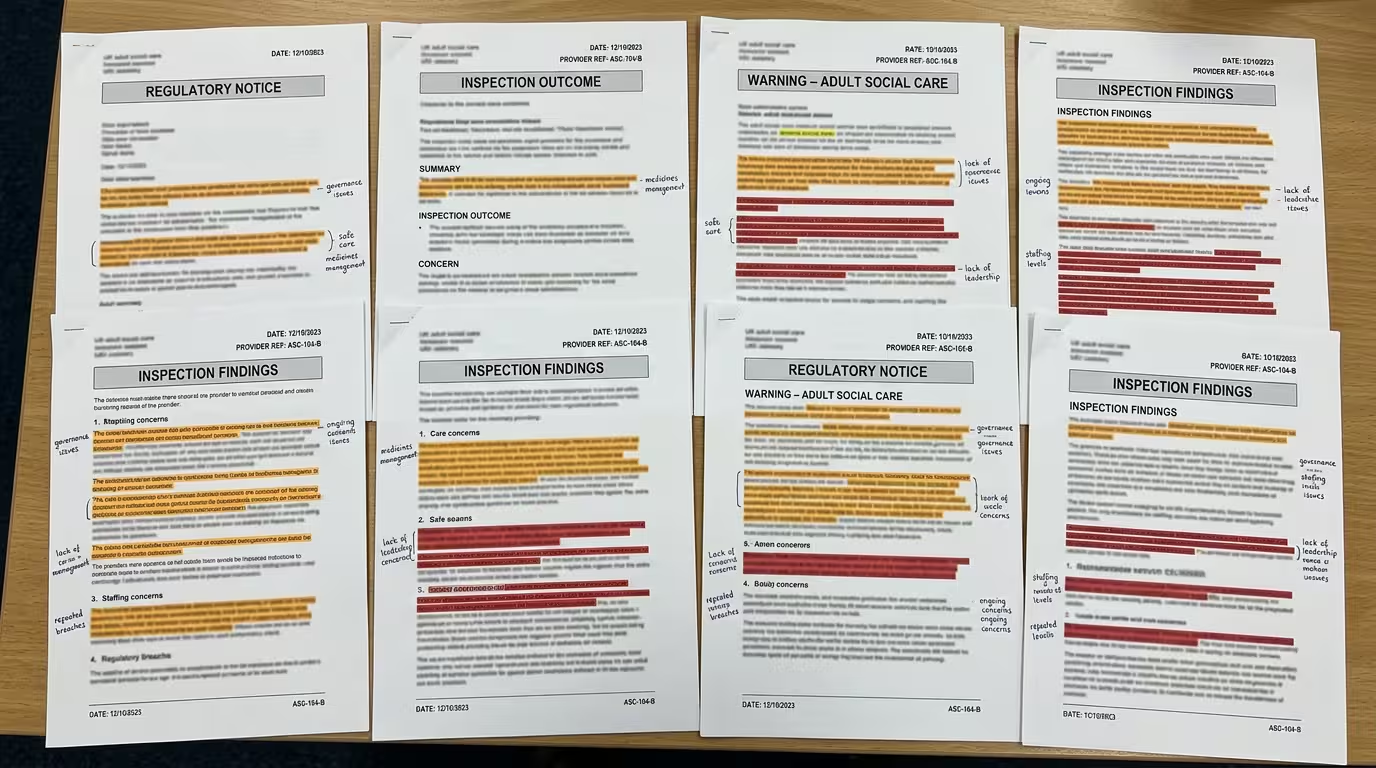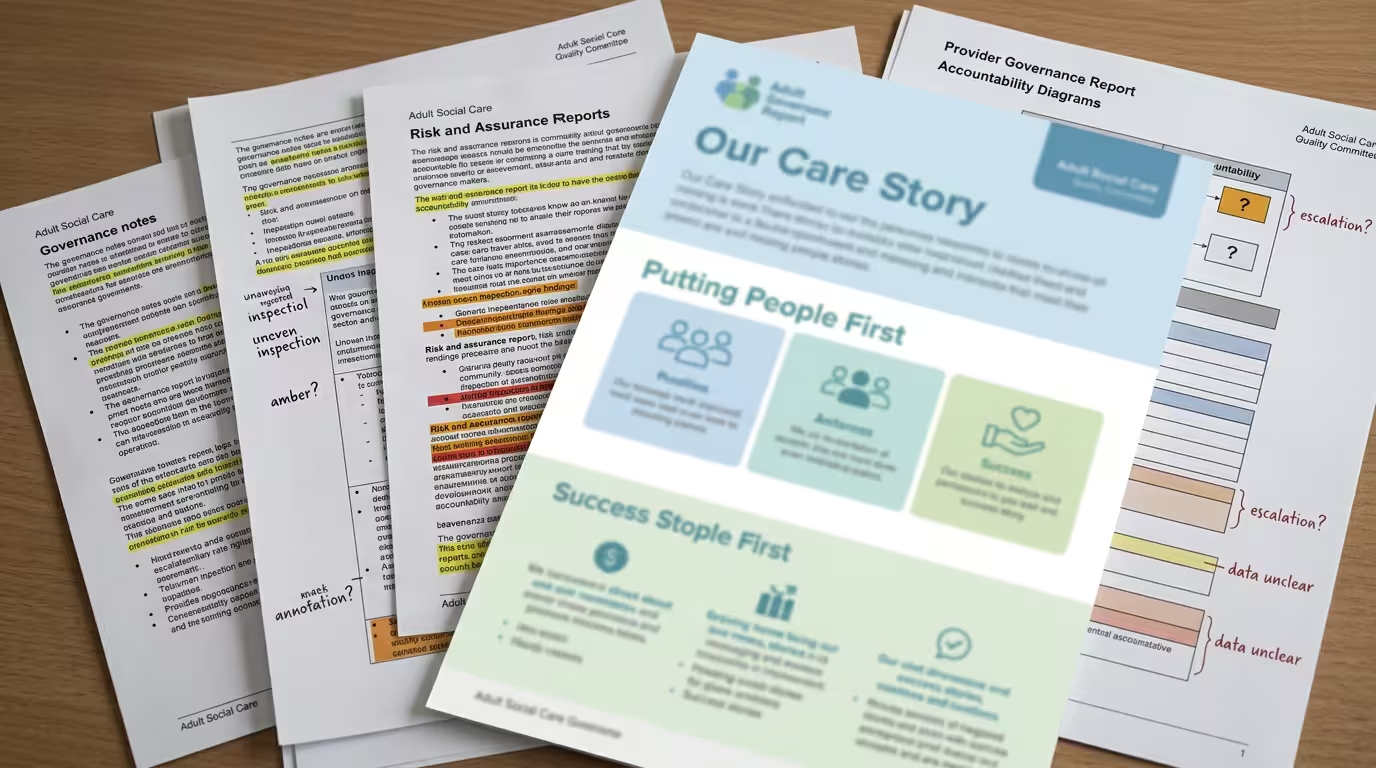
A strong public narrative can be valuable. It helps a provider explain what it stands for, how it works, and why people should trust it. In adult social care, where confidence and reassurance matter, a clear outward story can support credibility with families, partners, and the wider public. It can create coherence around the organisation at a time when the service itself may be complex, distributed, or difficult to summarise simply.
But strong narrative has a side effect. The better it works, the easier it can become for boards and senior teams to read the wider public picture through that narrative rather than alongside it. Once that happens, the outward story starts doing more than communication. It starts shaping what feels visible, what feels settled, and which public inconsistencies attract less attention than they should.
What strong public narrative can do
A strong public narrative gives an organisation interpretive stability. It tells external audiences what kind of provider they are looking at and what broad meaning to give to visible information around it. When the narrative is clear, confident, and well maintained, it can help the provider appear coherent even when the wider footprint is more complex.
This is not inherently a problem. Good organisations should be able to describe themselves well. A strong public narrative can reflect genuine strengths in leadership, values, communication, and service identity. It can also help avoid unnecessary confusion where the organisation would otherwise look fragmented or hard to understand.
How narrative starts doing too much work
The issue begins when the narrative becomes the main lens through which other public material is read. Instead of asking whether visible signals continue to support the outward story, leadership may begin assuming that the story itself is enough to hold the picture together.
At that point, public narrative no longer just communicates. It begins to absorb weak contradiction. Uneven local signals, mixed feedback, leadership shifts, gaps in visible accountability, or repeated low-level concerns may all appear less important because the broader story still feels stable and credible.
This is one reason visible misalignment can persist for longer than expected. The narrative does not erase the weaker signals. It simply makes them easier to read as minor, isolated, or already explained.
What strong public narrative can hide
A strong public narrative does not usually hide things by direct falsehood. More often, it hides by smoothing. It creates enough coherence that boards and senior teams may not feel the same urgency to test whether the wider public footprint still looks equally coherent underneath.
What can become harder to see may include:
- gaps between public claims and visible support, where the outward story sounds stronger than the wider public evidence around it
- site-level unevenness, where one location no longer fits comfortably within the broader group narrative
- leadership or accountability ambiguity, where continuity and responsibility are less legible from the outside than the public story implies
- repeated low-level public inconsistency, which looks minor individually but more significant when read together
- reputation carrying more reassurance than the wider visible picture can fully support
These things are not always dramatic, which is exactly why they can remain hidden for longer under a strong narrative surface.
Why this matters for boards and senior teams
Boards and senior teams rely on framing as much as information. If the framing around the organisation is too settled, too polished, or too reassuring, weaker signals may receive less weight than they deserve. That does not mean leaders are being careless. It means narrative can quietly affect thresholds of attention.
This matters because governance failure rarely begins as one obvious fact that everybody can see. More often, it emerges through accumulation, weak alignment, and signals that feel individually too small to challenge the wider story. If that wider story is strong enough, early questions may be delayed simply because the organisation still appears coherent at the surface.
Why good narrative can still create blind spots
There is an understandable temptation to think that only weak or misleading organisations have this problem. In reality, even well-intentioned and competent providers can develop narrative blind spots. A strong story built on real strengths can still become too dominant in the reading of weaker signals elsewhere.
The problem is not that the narrative is invented. The problem is that it may continue to reassure after the wider public footprint has become more mixed than the story itself suggests. Boards and senior teams can then end up trusting the coherence of the narrative more than the coherence of the visible evidence around it.
How to read narrative more carefully
A better approach is not to become suspicious of narrative as such. It is to read it as one public layer among others. The question is not whether the provider's public story sounds convincing. The question is whether that story is still being adequately supported by the wider visible footprint.
It helps to ask:
- Does the public narrative still fit the broader public evidence picture?
- What kinds of signals seem easier to overlook because the outward story is so settled?
- Are weaker local or governance signals being treated as isolated too quickly?
- Is reassurance coming more from the narrative itself than from the visible alignment around it?
These questions do not undermine good communication. They help boards and senior teams keep communication and scrutiny connected rather than allowing one to replace the other.
Why outside-in reading is useful here
From inside an organisation, strong narrative can feel like clarity. From outside, it may look more conditional. External readers do not automatically carry the same confidence in the story, especially if the wider public footprint appears more mixed when read closely.
An outside-in reading is useful because it tests the relationship between the narrative and the visible evidence around it. It helps show whether the public story is still being supported coherently, or whether it has started to smooth over visible tensions that deserve closer internal attention.
In practice
Pattern Scope reads strong public narrative as part of the visible provider footprint, not as a shortcut for it. The aim is to understand whether the narrative remains aligned with what is publicly visible across governance, reputation, leadership, and location-level signals.
That can be especially useful for boards and senior teams, because the risk is not merely that narrative exists. The risk is that it becomes persuasive enough to reduce the visibility of weaker public signals that still matter. Outside-in reading helps bring those signals back into view before the organisation starts relying too heavily on the stability of its own public story.
Pass on the canonical article link in the format people already use.
Get alerts on this device when new writing lands.
Turn on browser notifications for fresh articles and high-signal editorial drops. On iPhone or iPad, install the app to the Home Screen first.
No inbox clutter. This browser or installed web app becomes the endpoint.
Recommended next step
Want this applied to a live provider context?
Pattern Scope turns public-source review into a structured outside-in reading for decision-makers who need to know where to look more closely.