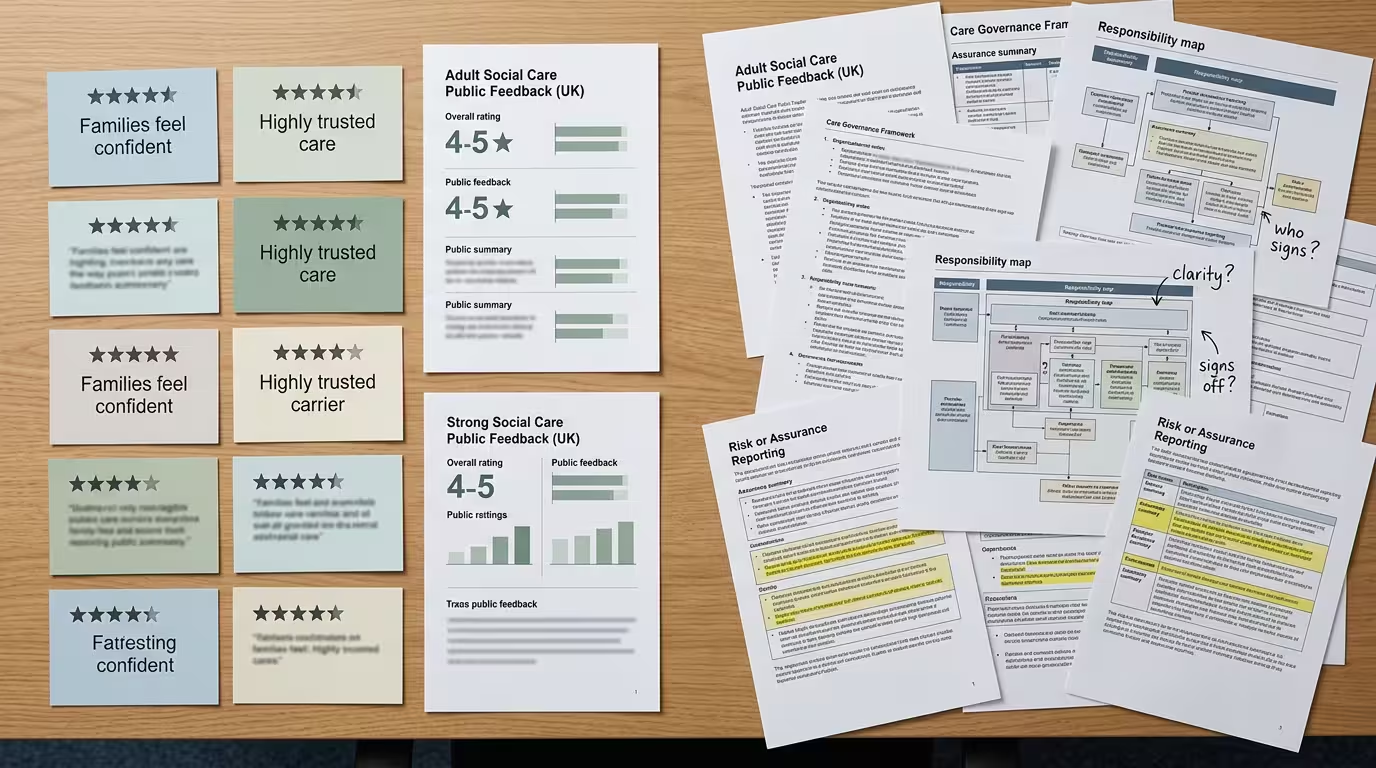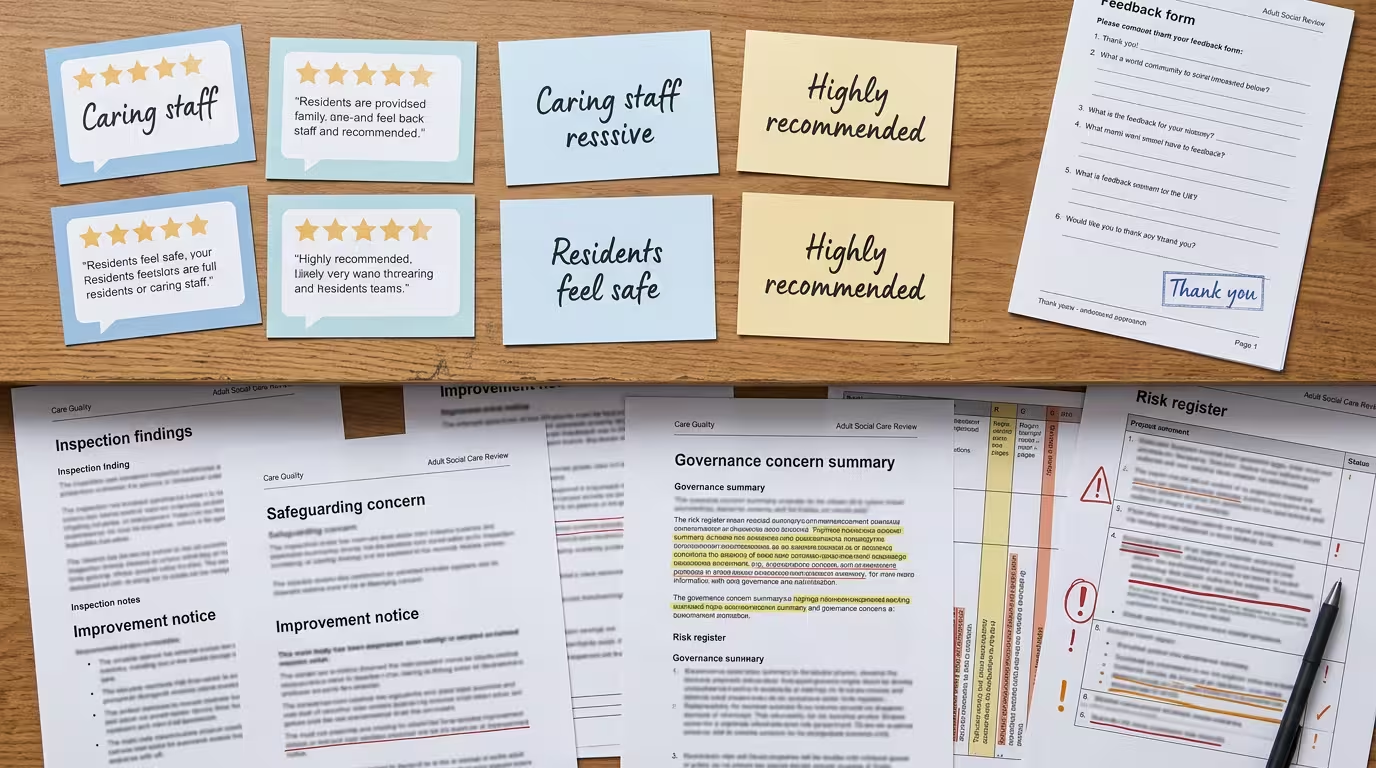
Reputation is powerful. In adult social care, a trusted name, positive public feedback, warm family experience, and a stable outward narrative can create a strong sense that a provider is safe, well run, and fundamentally reliable. Often, that confidence is earned. But reputation and risk are not the same thing, and treating them as if they were can create blind spots.
A provider may be well regarded in public and still show signs of unevenness, ambiguity, or governance pressure in the wider visible picture. The gap between those two things is what matters here. Not because reputation is unimportant, but because it can be stronger, warmer, and more settled than the underlying risk picture suggests.
What the reputation-risk gap is
The reputation-risk gap is the distance between how safe, stable, or well governed a provider appears from its outward reputation and what the wider public evidence suggests when read more closely.
That gap does not mean the provider is failing. It does not mean the reputation is undeserved. It means that public trust, positive experience, and visible reassurance may be describing one part of reality, while other public signals point to a more mixed, less settled, or less coherent picture underneath.
In practice, the gap often appears when strong public confidence sits alongside visible issues such as repeated regulatory concerns, uneven location-level signals, leadership instability, gaps between public claims and public support, or a broader public footprint that feels less aligned than the reputation implies.
Why reputation and risk can diverge
They diverge because they are built from different forms of visibility. Reputation is often shaped by lived experience, trust, familiarity, communication, and the emotional credibility of day to day care. Risk is broader. It includes governance strength, continuity, oversight, leadership visibility, regulatory patterning, structural consistency, and the organisation's ability to hold standards coherently over time.
A service can feel good, relationally strong, and publicly trusted while still carrying weaknesses that are less visible in ordinary experience. Equally, a provider can have a strong wider brand that smooths over local variation or delays external recognition that one part of the organisation has become less settled than the whole.
This is why the gap can develop without obvious contradiction. The reputation is describing one visible layer. The risk picture may be emerging in another.
How the gap develops
The reputation-risk gap usually develops gradually rather than all at once. It often grows through a combination of reassuring signals and less visible drift.
That may include patterns such as:
- strong public feedback continuing while governance or oversight concerns remain harder to see from outside
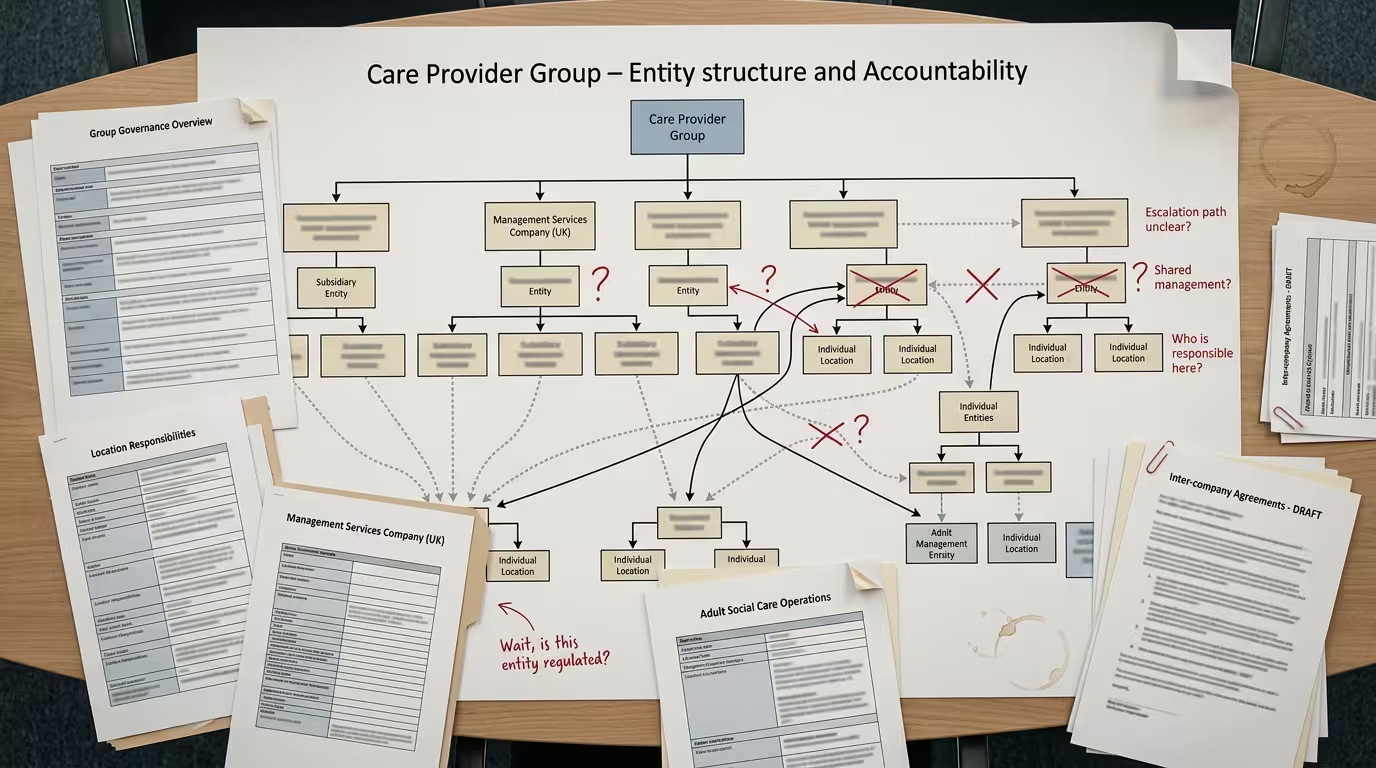
- a stable group narrative masking unevenness at one location or service line
- positive surface experience sitting alongside weaker formal assurance or repeated regulatory themes
- leadership continuity appearing stronger in narrative than in the visible public footprint
- public confidence building faster than public evidence is keeping up
What matters is not any one signal on its own. The gap becomes meaningful when several visible strands no longer sit together as comfortably as the reputation suggests they should.
Why this matters for leadership
The danger of the reputation-risk gap is not that it creates bad publicity. The deeper danger is that it can create false reassurance inside the organisation as well as outside it.
If leaders start treating strong reputation as a proxy for low risk, some questions may be asked too late. Public trust may then act as a kind of soft cover over weaker visibility elsewhere. The organisation continues to feel secure while the wider public footprint is becoming harder to read coherently.
For boards, owners, and senior teams, this matters because governance depends on seeing what reassurance may be hiding as well as what it is genuinely confirming. A strong reputation is useful. It is not, on its own, an assurance mechanism.
What the gap does not mean
It is important not to overstate the point. A reputation-risk gap does not mean that public trust is naïve or irrelevant. It does not mean that positive family feedback should be treated with suspicion. It does not mean that a well-regarded provider is secretly weak.
It simply means that trust, experience, and visible warmth do not automatically settle questions about wider organisational resilience, governance strength, or the consistency of the public footprint. The issue is not whether the reputation is real. The issue is whether it is being asked to carry more assurance than it reasonably can.
How to read the gap properly
A better reading starts by holding reassurance and risk together rather than forcing a choice between them. The question is not whether reputation matters. It is how far it should be allowed to stand in for the wider visible evidence picture.
That means asking questions such as:
- Does the wider public footprint broadly support the strength of the reputation?
- Are there visible areas where the evidence looks more mixed than the public confidence suggests?
- Is the reputation consistent across locations, time periods, and public source types?
- What remains publicly unclear even though the outward story feels reassuring?
These questions do not undermine trust. They help leadership understand whether trust and visible evidence are still moving together.
In practice
Pattern Scope uses this gap as an outside-in reading lens. The aim is not to challenge reputation for its own sake, but to see whether visible reassurance is fully aligned with the broader public footprint around a provider.
That can be useful when a provider appears strong in public but the wider signals feel less settled when read closely. In those cases, the task is not to dismiss trust. It is to understand whether trust is resting on a public picture that still looks coherent, or whether the visible evidence suggests a more mixed risk story than the reputation alone would imply.
Pass on the canonical article link in the format people already use.
Get alerts on this device when new writing lands.
Turn on browser notifications for fresh articles and high-signal editorial drops. On iPhone or iPad, install the app to the Home Screen first.
No inbox clutter. This browser or installed web app becomes the endpoint.
Recommended next step
Want this applied to a live provider context?
Pattern Scope turns public-source review into a structured outside-in reading for decision-makers who need to know where to look more closely.