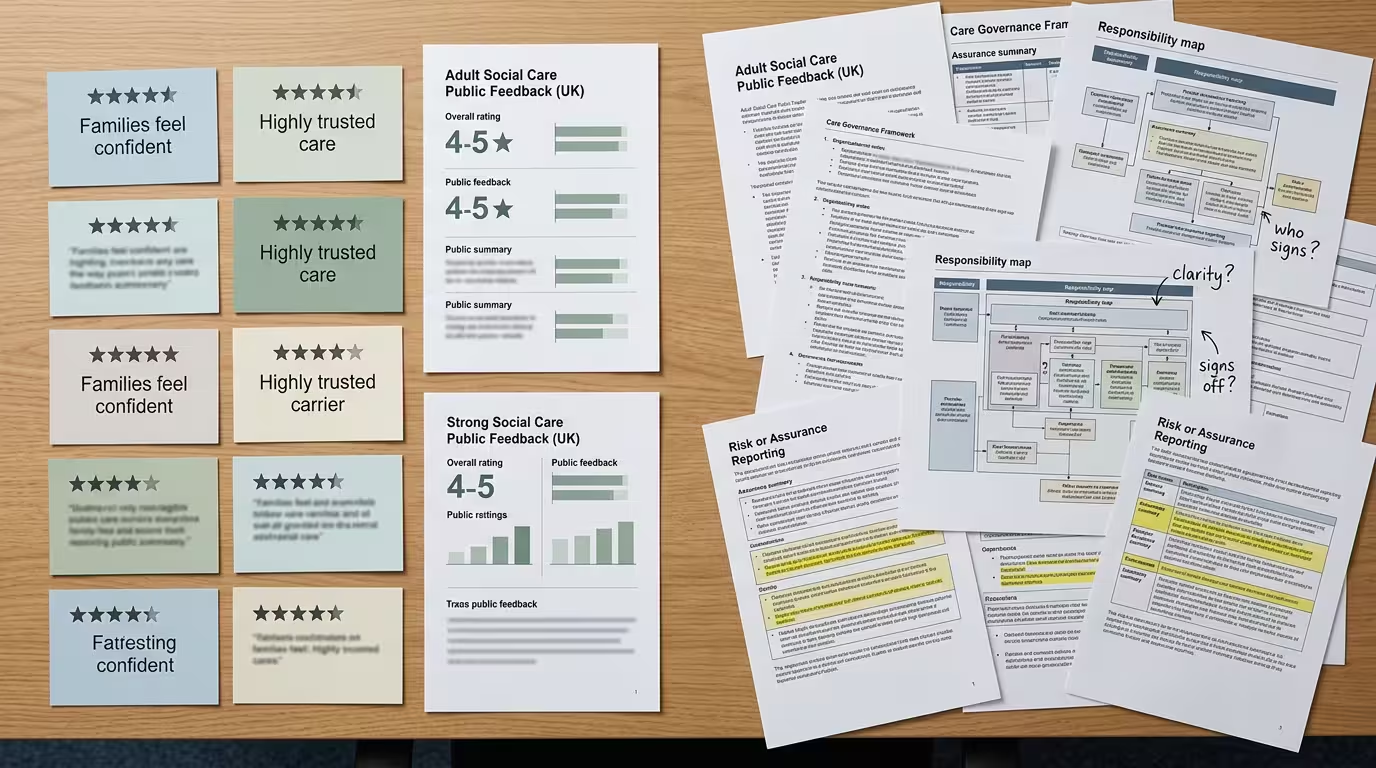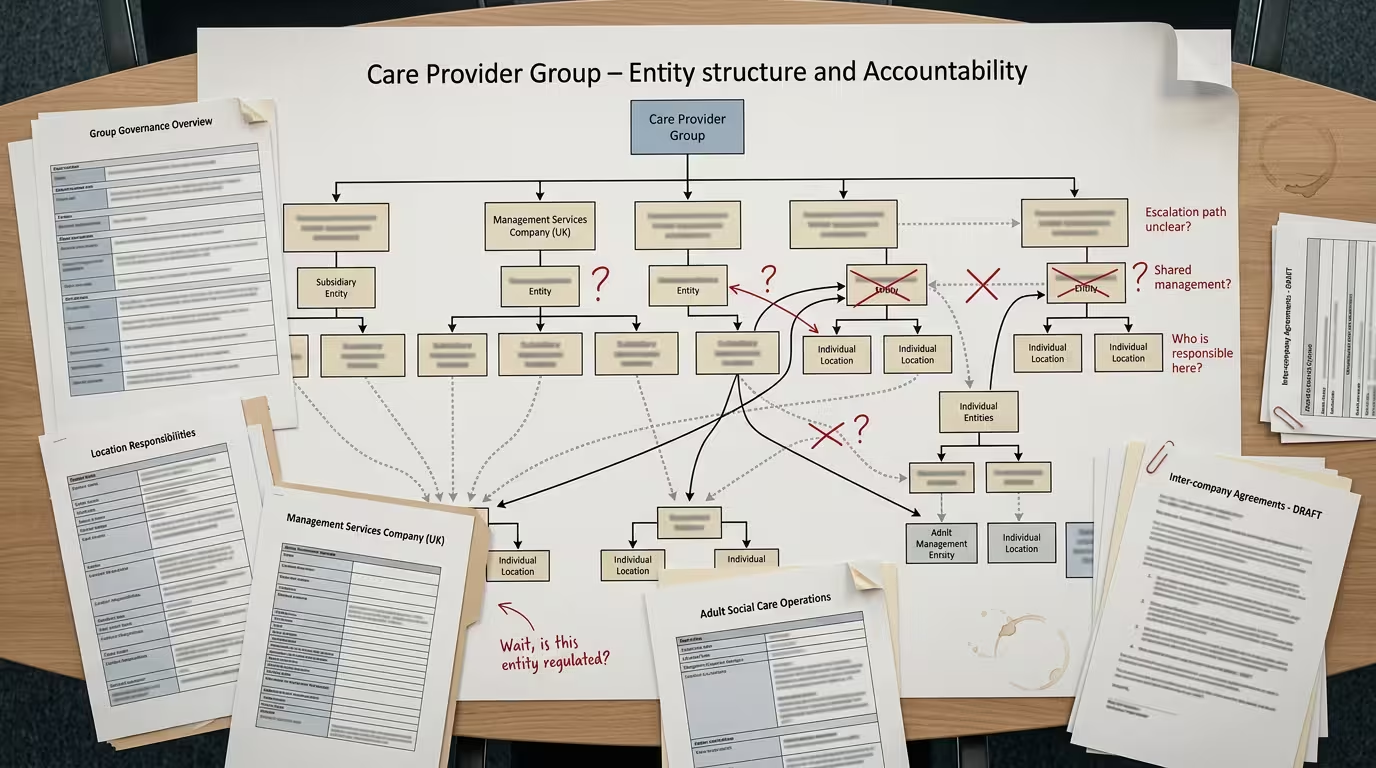
Provider groups are often read through their wider reputation. A strong overall brand, stable public language, and consistent service narrative can create a reassuring sense of coherence. In many cases, that coherence is deserved. But group-level confidence can also make it harder to notice when one location has started to look different from the rest.
This kind of drift is not always dramatic. It may appear first as a subtle gap between the wider provider story and the visible public picture around one home or service. The difference may show up in tone, regulatory patterning, public feedback, leadership visibility, or the way one location sits within the group's broader footprint. On its own, none of that may prove much. Read together, it can suggest that one part of the organisation is no longer aligning as neatly with the wider narrative as it once did.
Why group narratives can mask local unevenness
Group narratives are designed to create clarity. They present the provider in broad, stable terms and help external readers form a general view of values, standards, and identity. That makes sense. Most external audiences do not begin by analysing location-level variation in detail. They begin with the wider story.
The problem is that location-level difference can remain partially hidden inside that bigger picture. A well-regarded provider may continue to look settled overall even when one site has become less consistent in its public-facing signals. The stronger the wider narrative, the easier it can be for weaker local signals to be read as exceptions rather than as part of a developing pattern.
How drift becomes visible
Drift usually does not appear as one clear break. It becomes visible through accumulation. A location may begin to stand out because its visible public footprint no longer sits comfortably within the broader provider story.
That may happen through patterns such as:
- regulatory signals that look more uneven than the wider group picture
- public reviews or feedback that carry a different tone from the provider's usual reputation
- less visible continuity in local leadership, making accountability or stability harder to read from outside
- public-facing claims that feel less well supported at location level
- repeated small differences that would look minor alone, but begin to matter when read together over time
The key point is that drift is often comparative. It becomes visible not only because a location looks uncertain in isolation, but because it looks different from what the wider provider narrative leads external readers to expect.
What location-level unevenness can signal
Unevenness at one location does not automatically mean deep structural failure. It may reflect ordinary local variation, short-term disruption, leadership transition, or a temporary mismatch between public information and current reality. Those possibilities matter and should not be ignored.
At the same time, location-level drift can still be governance-relevant. It may suggest that one site is under different pressure from the rest of the group. It may indicate weaker local continuity, slower improvement visibility, or a gap between central narrative and local execution. It may also show that group-level assurance is not translating into a fully coherent public footprint across all parts of the organisation.
That is why drift matters. It may not prove the internal explanation, but it can still reveal where the external picture is becoming less aligned than leadership may assume.
Why this matters earlier than it may first appear
Once local unevenness becomes obvious to everyone, it is usually no longer early. By that point, the location may already be carrying a public-facing picture that is harder to reconcile with the wider provider brand. The organisation can then find itself responding to visible inconsistency rather than noticing it in time.
Earlier attention matters because one drifting location can begin to shape how the wider provider is read. Even where the broader group remains strong, visible inconsistency at location level can create questions about oversight, comparability, and how evenly standards are being held across the footprint.
How to read drift without overstating it
The better approach is neither to dismiss local unevenness as noise nor to treat it as final proof of wider weakness. A location can look different without the wider organisation being unstable. Equally, a strong wider organisation can still have a location that deserves closer attention.
A proportionate reading asks:
- Is the location visibly different from the wider provider picture?
- Is that difference isolated, or part of a repeated pattern?
- Does the drift appear across more than one type of public signal?
- How much of the difference may be explained by timing, transition, or incomplete public information?
These are not questions designed to prove a conclusion too early. They are designed to help leadership see whether local variation has become visible enough to matter.
Why outside-in reading is useful here
Location-level drift can be difficult to read from inside a provider group because internal familiarity often sits at group level as well as site level. External reading adds something different. It compares the visible local picture with the wider public narrative and asks whether they still sit together convincingly.
That comparison is useful because it makes coherence testable. It helps show where the wider provider story is still holding, where one location may be diverging, and where closer internal attention may be worth focusing before visible unevenness becomes harder to contain or explain.
In practice
Pattern Scope reads location-level signals in the context of the wider provider footprint rather than in isolation. The aim is not to exaggerate difference, but to notice when one location has started to sit less comfortably within the broader public story around the organisation.
That is often where outside-in reading becomes most useful. It helps leadership see whether a local public footprint still looks broadly aligned with the wider provider narrative, or whether the visible picture is beginning to drift in ways that deserve a closer internal look.
Pass on the canonical article link in the format people already use.
Get alerts on this device when new writing lands.
Turn on browser notifications for fresh articles and high-signal editorial drops. On iPhone or iPad, install the app to the Home Screen first.
No inbox clutter. This browser or installed web app becomes the endpoint.
Recommended next step
Want this applied to a live provider context?
Pattern Scope turns public-source review into a structured outside-in reading for decision-makers who need to know where to look more closely.